
A Masterpiece of Elegance: Your Bespoke Lake Como Wedding
Planning a wedding abroad should be an elegant, seamless experience—one where every detail is carefully orchestrated to create a moment of pure magic. With over 20 years of expertise, Giorgia Fantin Borghi and her team craft bespoke Lake Como weddings that blend timeless elegance with contemporary artistry.
From selecting an exquisite lakeside private villa to curating world-class gastronomy and breathtaking floral installations, we transform your vision into a masterpiece of refined beauty and impeccable hospitality. With a deep understanding of etiquette, ceremonial traditions, and artistic storytelling, our events are not just celebrations—they are immersive experiences.
Why Lake Como is the Pinnacle of Luxury Weddings

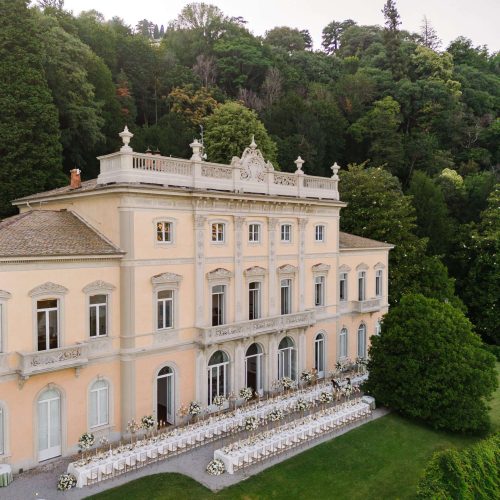
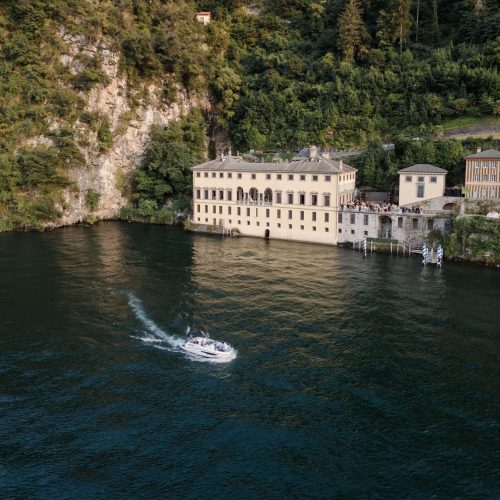
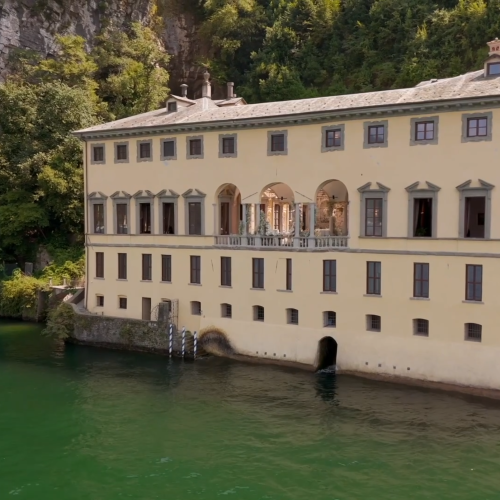


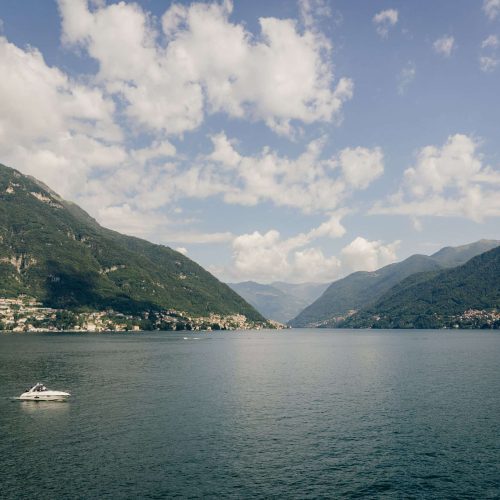
Lake Como is synonymous with discreet luxury and unparalleled elegance. Renowned for its historic estates, cinematic landscapes, and refined hospitality, this enchanting Italian destination is the epitome of romance.
For couples seeking a truly personalised and immersive wedding experience, Lake Como offers:
- Exclusive villa settings, from grand lakeside estates to secluded garden retreats;
- World-class cuisine curated by Italy’s top chefs, ensuring an unforgettable dining experience;
- Effortless luxury travel, with private transfers and seamless guest accommodations;
- Perfectly curated guest experiences, including intimate boat tours and pre-wedding celebrations;
- A sophisticated atmosphere where Italian heritage, art, and nature blend harmoniously.
Our weddings are not just events. They are elevated sensory experiences where every touchpoint is meticulously designed to evoke emotion and timeless beauty.
Curating Your Lake Como Wedding with Artistic Precision

Giorgia Fantin Borghi is a master in the art of hosting, ensuring that each wedding reflects the highest level of craftsmanship, etiquette, and refinement.
Our signature approach blends tradition with innovation, resulting in flawless, breathtaking celebrations.
Bespoke Wedding Planning & Design
We bring your vision to life with exquisite aesthetics, floral artistry, and impeccable styling, ensuring a truly unforgettable celebration.

Venue Selection & Coordination
We can help you find the perfect backdrop for your wedding day, whether it’s a grand lakeside villa or an intimate garden estate.
Luxury Vendor & Catering Management
We partner with Italy’s top chefs, florists, and photographers to ensure every element of your day reflects elegance and refinement.
Guest Experience & Travel Coordination
From VIP travel arrangements to curated pre- and post-wedding events, we create an immersive experience for you and your guests.
Ceremony Planning & Legal Assistance
We take care of all legal requirements and paperwork for UK couples, whether you choose a civil, religious, or symbolic ceremony—making the process effortless and stress-free.
Top Luxury Wedding Venues in Lake Como
From historic villas to modern extravaganzas, our team can help you secure the ideal venue for a one-of-a-kind wedding.

Villa del Balbianello is, by general agreement, the most iconic wedding villa on Lake Como — set on the tip of the Dosso d’Avedo peninsula in Lenno (Tremezzina), accessible only by boat or by a one-kilometre footpath, and recognisable internationally from its appearances in Star Wars: Episode II – Attack of the Clones (2002) and Casino Royale (2006). The villa is owned by FAI (Fondo Ambiente Italiano), the Italian national trust, since 1988, when it was donated by its last private owner, the explorer and mountaineer Count Guido Monzino. FAI ownership shapes everything about how weddings work at this villa.
History & Architectural Heritage
The Dosso d’Avedo peninsula has been continuously occupied since the 13th century, originally by a Franciscan monastery — and the two campanile towers visible on the villa today survive from that medieval monastery. In 1785, Cardinal Angelo Maria Durini purchased the property and, by 1787, had converted it into a private villa, adding the elegant loggia that has since become its most recognisable architectural feature.
After Cardinal Durini’s death the villa passed through a sequence of notable owners. His nephew Luigi Porro Lambertenghi inherited it (1796–1820), followed by Giuseppe Arconati Visconti, and then in 1919 by the American businessman Butler Ames. The final private owner, the explorer Count Guido Monzino (1928–1988), acquired the villa in 1974 and used it as the base for his Arctic and Himalayan expeditions; his private library and the trophies of his exploration are preserved inside the villa today.
In his will, Monzino donated Villa del Balbianello to FAI (Fondo Ambiente Italiano), Italy’s national heritage trust, on the model of the United Kingdom’s National Trust. Since 1988 the villa has operated as a heritage site open to the public — by 2019 it had become FAI’s most-visited property, with over 135,000 annual visitors.
Film & Cultural Recognition
Villa del Balbianello has appeared in several internationally distributed films:
- A Month by the Lake (1995) — feature film starring Vanessa Redgrave and Edward Fox.
- Star Wars: Episode II – Attack of the Clones (2002) — the loggia and gardens served as the setting for the secret marriage of Padmé Amidala and Anakin Skywalker, exposing the villa to a global audience.
- Casino Royale (2006) — the villa appeared as a recovery location for James Bond following the film’s climactic events.
These appearances created the villa’s contemporary fame as a wedding location, particularly the Attack of the Clones scene, which positioned Villa del Balbianello in the popular imagination of an entire generation as the place for a fairytale wedding on Lake Como.
Ceremony Spaces & Access
The villa is small relative to other Lake Como venues and the ceremony spaces are correspondingly intimate. The principal areas used for weddings are:
- The loggia — the open arcaded structure that dominates photographs of the villa, with views over both arms of Lake Como simultaneously.
- The terraced gardens — formal Italian terraces descending from the villa to the water’s edge, intensively maintained by FAI’s specialist gardening team.
- The lakefront landing stage — where boats arrive, providing the iconic photo of arrival by water that almost every Balbianello wedding includes.
The villa is only accessible by boat from Lenno (a 10-minute crossing arranged by FAI’s appointed transport) or via a footpath of roughly one kilometre through the Spina Verde park — too long and steep for most wedding party arrivals. Boat access is the standard for all weddings, which builds logistical drama into the ceremony day but also limits the number of guests who can practically be transported.
FAI Rules & Important Constraints
Because Villa del Balbianello is a public heritage site administered by FAI (not a hotel or private venue), the rules around weddings are unusual and need to be understood early in planning:
- Ceremony only: the villa is generally used for the ceremony itself and immediate photography, not for receptions or dinners. Receptions take place at nearby Lake Como venues, accessed by boat after the ceremony.
- Time slots: FAI allocates limited wedding time slots, usually outside the villa’s public visiting hours. Weekdays are far more available than weekends.
- Strict guest cap: the practical guest limit at the villa itself is approximately 80, constrained by the size of the gardens and the boat-transport logistics.
- No alterations: as a heritage site, no structural setups, no large floral installations, no anchored decoration. Setups must be light and removable.
- Seasonal availability: typically March/April to October, aligned with FAI’s opening season. Specific dates depend on annual schedule.
These constraints rule out couples looking for a venue that hosts everything from ceremony to late-night reception. They suit couples whose vision centres on the ceremony moment itself, with the reception planned separately at a nearby venue such as Grand Hotel Tremezzo, Villa Sola Cabiati, or a private villa rented for the night.
Wedding Cost at Villa del Balbianello
Villa del Balbianello pricing for weddings is set by FAI as a heritage trust, with all revenue contributing to the maintenance of the property. Figures vary by year, day of week, and ceremony configuration. Indicative 2026 ranges:
- Ceremony rental at the villa (FAI fee, typical weekday, single space): approximately €15,000–€25,000.
- Saturday or premium-date ceremony: approximately €25,000–€40,000+, depending on available slot and configuration.
- Boat transport, photography slot management, and FAI staff coordination: additional and quoted separately.
Because the villa hosts ceremony only, the total wedding budget includes a separate reception venue. A complete 60-guest wedding combining Villa del Balbianello ceremony plus a reception at a nearby Lake Como property (Grand Hotel Tremezzo, a private lakefront villa, or Villa Sola Cabiati) generally runs between €120,000 and €280,000 in 2026, depending heavily on which reception venue is chosen and vendor tier.
For broader Lake Como wedding cost context, see our Lake Como wedding cost guide.
Civil Ceremonies & Legal Requirements
Civil ceremonies at Villa del Balbianello are performed by an officiant from the Comune di Tremezzina (the municipality that includes Lenno and the surrounding shore). The combination of comune scheduling, FAI venue scheduling, and ferry/boat logistics means that the legal civil ceremony slot needs to be coordinated very early in the planning process.
Foreign couples marrying civilly in Italy must provide:
- A nulla osta al matrimonio (no-impediment-to-marry certificate) from their country’s consulate in Italy, apostilled for signatories of the 1961 Hague Apostille Convention.
- Sworn translation of all foreign documents by a court-registered translator (traduttore giurato).
- An Italian codice fiscale, obtainable from the Agenzia delle Entrate.
- Two witnesses with valid identification at the ceremony.
- An official interpreter if either spouse does not understand Italian (mandatory by Italian law).
Symbolic ceremonies are also performed at the villa and offer creative freedom in officiant, music, and ceremony structure. Many international couples opt for a symbolic ceremony at the loggia, with the legal civil marriage completed at home before or after the trip.
Practical Logistics
The villa’s address is Via Guido Monzino 1, Tremezzina (Como). Realistic logistics for guests arriving for a Villa del Balbianello wedding:
- Milan Malpensa (MXP) — approximately 80 kilometres south-west, 90–110 minutes by car. Main long-haul international airport.
- Milan Linate (LIN) — approximately 75 kilometres south, 80–100 minutes by car. Closest helicopter origin (typically 20–28 minutes to Lake Como).
- Lugano (LUG) — approximately 40 kilometres north in Switzerland, smaller and limited service.
- Bergamo-Orio al Serio (BGY) — approximately 95 kilometres east, low-cost routes.
From the parking area in Lenno, guests reach the villa by FAI-coordinated boat — typically a short crossing of 10 minutes across the lake’s southwest branch. The arrival by boat at the villa’s landing stage is one of the signature wedding-day moments. Guests should be advised to dress for the boat ride (and for the stone steps and gravelled paths inside the villa grounds).
Best Months for a Villa del Balbianello Wedding
The villa’s FAI operating season runs approximately mid-March through October. Within that window, the optimal months for a wedding are May, June, and mid-September to early October, when temperatures sit between 20 and 27°C, the gardens are at their floral peak, and the light is favourable. Late April and late October are increasingly chosen for shoulder-season weddings, with cooler temperatures and lower visitor density at the villa.
Avoid: November through mid-March (villa closed); August (peak visitor traffic at Lake Como; ZTL restrictions in nearby Tremezzina; warm humid weather).
Comparison with Other Lake Como Venues
Within Lake Como, Villa del Balbianello is in a category of its own — there is no perfect substitute for the cinematic ceremony moment on the loggia, with both arms of the lake visible behind. For couples who want the same kind of dramatic lakefront ceremony but with on-site reception capability, the closest alternatives include Villa Pizzo (full estate exclusive use with private gardens), Villa Sola Cabiati (18th-century baroque villa operated through Grand Hotel Tremezzo), and Villa d’Este in Cernobbio (grand-hotel format with much broader space).
What distinguishes Villa del Balbianello: the loggia and its panoramic view, the unique arrival-by-boat moment, the cultural recognition from Star Wars and Casino Royale, the documented historical owners (Cardinal Durini, Butler Ames, Guido Monzino), and the genuine FAI heritage status that contributes every ceremony fee back to Italian cultural preservation.
Planning Recommendations
If you are considering Villa del Balbianello for your wedding, the realistic planning approach is:
- 14–18 months ahead: initial enquiry with FAI to confirm slot availability and ceremony configuration. FAI allocates limited slots and conditions are reviewed annually.
- 10–12 months ahead: FAI contract, deposit, simultaneous reception-venue contract at nearby Lake Como property.
- 8–9 months ahead: vendor curation, including a photographer experienced at Balbianello (the timing constraints inside FAI’s slot are tight), florals planned within FAI’s heritage constraints, music.
- 4–6 months ahead: legal-document research for foreign couples, transfer planning including boat coordination from Lenno.
- 2–3 months ahead: document submission to the Comune di Tremezzina for civil ceremonies, final boat-arrival timing, photographer site walk-through.
- 2 weeks ahead: rehearsal walk-through (subject to FAI scheduling), vendor confirmations, weather contingency review (no major covered backup option exists on-site, so weather contingency typically involves the reception venue rather than the villa).
For a complete Lake Como wedding planning context, see our Lake Como Wedding Cost Guide and our How to Plan a Wedding in Italy. For couples wanting villa weddings across Italy more broadly, see our Wedding Villas in Italy Guide.
Frequently Asked Questions
Who owns Villa del Balbianello?
Villa del Balbianello has been owned since 1988 by FAI (Fondo Ambiente Italiano), Italy’s national heritage trust — the equivalent of the United Kingdom’s National Trust. The villa was donated to FAI by its last private owner, the explorer and mountaineer Count Guido Monzino. All wedding fees contribute to FAI’s preservation work across Italy’s 52 heritage properties.
What films were shot at Villa del Balbianello?
Villa del Balbianello appeared in three internationally distributed films: A Month by the Lake (1995), Star Wars: Episode II – Attack of the Clones (2002, the secret wedding scene of Padmé Amidala and Anakin Skywalker on the loggia), and Casino Royale (2006, as a recovery location for James Bond). The Star Wars appearance in particular established the villa’s contemporary fame as a wedding destination.
Can we hold both the ceremony and reception at Villa del Balbianello?
Generally no. Villa del Balbianello is a heritage site used primarily for the ceremony itself and immediate photography. FAI rules and the small footprint of the gardens mean that full receptions and dinners are typically held at nearby Lake Como venues — Grand Hotel Tremezzo, Villa Sola Cabiati, or a private lakefront villa rented for the evening. Couples plan the ceremony at Balbianello plus a reception elsewhere, with boat or car transfer between the two.
How much does a wedding ceremony at Villa del Balbianello cost?
FAI sets the ceremony venue fee, with indicative 2026 ranges of approximately €15,000–€25,000 for typical weekday slots and €25,000–€40,000+ for Saturday or premium-date ceremonies. These figures cover venue access only; boat transport, FAI staff coordination, and photography time-slot management are quoted separately. A complete 60-guest wedding combining Villa del Balbianello ceremony plus reception at a nearby Lake Como venue typically runs between €120,000 and €280,000 in 2026.
Can foreign couples legally marry at Villa del Balbianello?
Yes. Civil ceremonies are performed at Villa del Balbianello by an officiant from the Comune di Tremezzina. Foreign couples need a nulla osta (no-impediment certificate) from their country’s consulate in Italy, sworn-translated documents, an Italian codice fiscale, and an interpreter if either spouse does not understand Italian. Many international couples opt instead for a symbolic ceremony at the loggia, with the legal civil marriage completed at home; this avoids the comune coordination overhead while preserving the iconic ceremony moment.
How do guests reach Villa del Balbianello?
The villa is reached by boat from Lenno (a 10-minute crossing on FAI-coordinated transport) or by a one-kilometre footpath through the Spina Verde park. Boat access is the standard arrival for weddings — both because of the practical guest experience and because the arrival at the lakefront landing stage is one of the signature wedding-day moments. The 1-km walking path is too long and steep for most wedding parties in formal attire.
What is the guest capacity at Villa del Balbianello?
The practical guest limit for a Villa del Balbianello ceremony is approximately 80 guests, constrained by the size of the loggia and gardens and by the boat-transport logistics from Lenno. Couples planning weddings of 80+ guests use Villa del Balbianello for the ceremony only and transfer the guest party to a larger nearby venue for the reception.
How far in advance should we book Villa del Balbianello?
FAI allocates limited wedding slots and the most desirable dates (Saturdays in May, June, late September, early October) book 14 to 18 months in advance. Weekday slots have shorter lead times of 8 to 12 months. Initial enquiries are best routed through a wedding planner familiar with FAI’s procedures, the boat-transport coordination, and the parallel reception-venue booking that almost every Balbianello wedding requires.
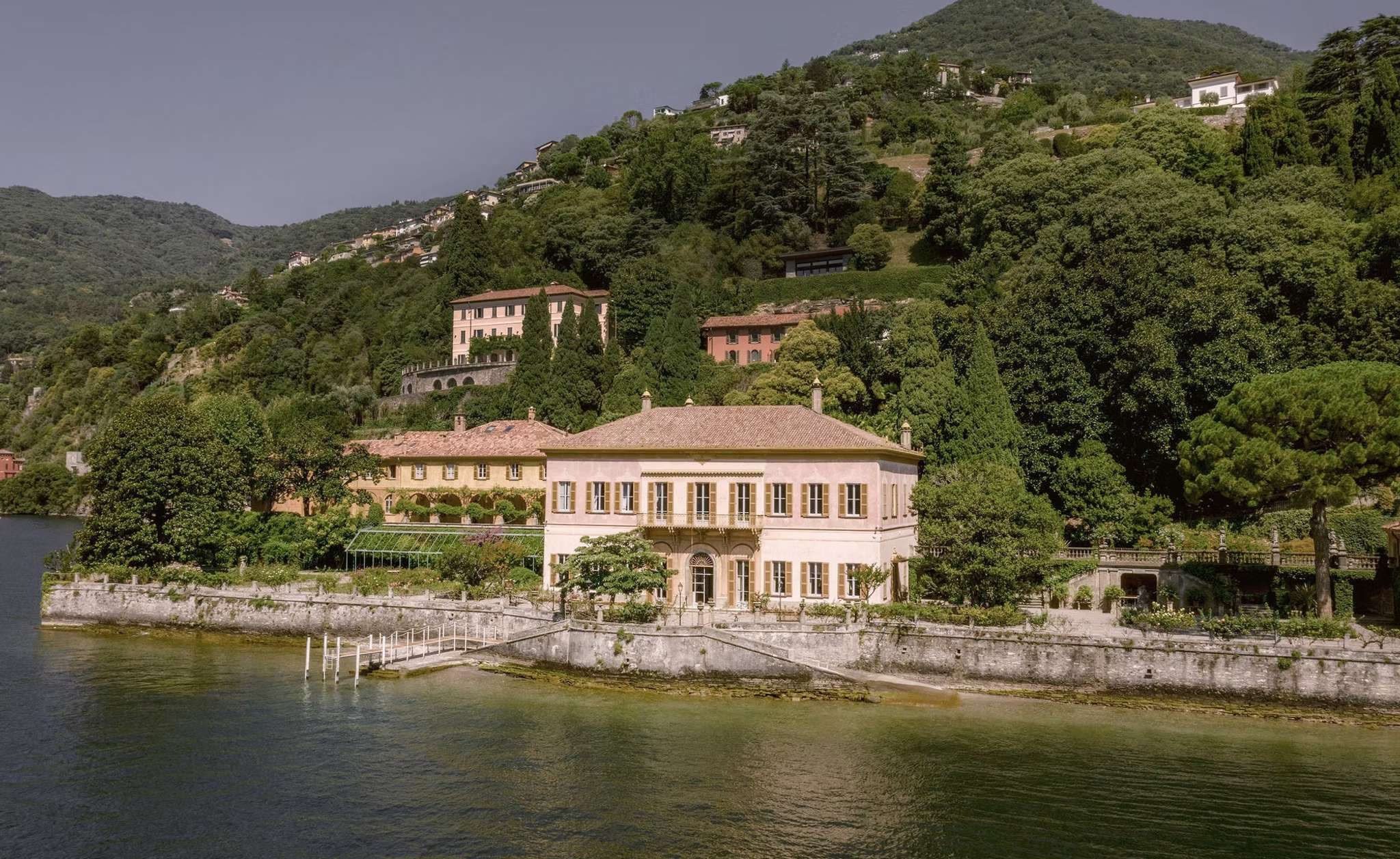
Villa Pizzo, also recorded historically as Villa Volpi-Bassani, occupies a promontory on Lake Como between Cernobbio and Moltrasio — a genuinely distinct property from the far more famous Villa d’Este and Villa Erba, though all three sit within the same small stretch of Cernobbio shoreline and are sometimes confused with one another. What distinguishes Villa Pizzo as a wedding venue is less scale than intimacy: terraced historic gardens recognised among Italy’s finest, a private lakeside dock, and a history of ownership running through Milanese merchants, an Austrian archduke, and one of Lake Como’s more colourful 19th-century owners.
A History With an Open Question at Its Centre
Sources genuinely disagree on when Villa Pizzo was built, and rather than resolve that disagreement with a single confident date, it’s worth stating both positions plainly. Italian Wikipedia records that the land was acquired in 1435 by the Como merchant Giovanni Mugiasca, and that the villa itself — originally known as “Speciana” — was built in 1532. The villa’s own official materials, by contrast, describe it as “a noble residence from the 17th century.” Couples and planners researching the property should treat the exact construction date as unresolved rather than pick one figure to present as settled fact.
From the Mugiasca Family to an Austrian Archduke
What is better documented is the chain of ownership that followed. The Mugiasca family held the property from 1435 until 1842, with a lapse in the late 1500s when it passed by inheritance to Cesare Speciano before returning to Mugiasca hands. On the death of the family’s last heir in 1842, the villa was bequeathed to Sant’Anna Hospital, and shortly after, in the 1840s, it was purchased by the Austrian Viceroy Archduke Rainer, who commissioned the landscape architect Villoresi — designer of the gardens at Monza’s Royal Villa — to lay out the grounds essentially as they appear today.
In 1865 the villa passed to Elise Musard, a figure associated in at least one source with King William III of the Netherlands; it was Musard who gave the villa the pink façade colour it retains. The property later came to the Volpi-Bassani family through the marriage of Pietro Volpi, a Milan lawyer, who commissioned the noted architect Luca Beltrami — designer of Milan’s Sforza Castle restoration — for a family mausoleum and the villa’s lakeside dock, both of which remain on the grounds today.
Architecture and Gardens
The villa itself presents a simple, geometric design with neoclassical influences; an on-site oratory is attributed to the architect Simone Cantoni, one of the notable Swiss-Italian architects working in Lombardy in the late 18th century. The interior retains frescoed rooms in the neoclassical style. Two cannons on the grounds are reported by at least one tourism source to have been used during the 1848 “Five Days of Como” uprising against Austrian rule — a detail that adds genuine historical texture, though it comes from a single source and should be presented with appropriate caution rather than as settled fact.
The gardens are the villa’s strongest claim to distinction: terraced grounds laid out under Archduke Rainer by the landscape architect Villoresi, featuring century-old shrubs and trees, cypress-lined avenues, a “botanical gallery” of clipped yews, and a formal Italian garden with Baroque fountains. Villa Pizzo is listed among the Grandi Giardini Italiani, the network recognising Italy’s most significant historic gardens — a credential shared with only a select group of Lake Como properties.
Weddings at Villa Pizzo
Villa Pizzo operates as a private historic residence available for weddings and events, with the venue’s own materials indicating availability from May through October. Capacity figures circulate primarily through wedding-planning sources rather than the villa’s own site directly: indoor spaces across four connected halls are commonly cited at up to approximately 120 guests, with the largest room, the Sala Muggiasca, seating around 60; outdoor capacity under a marquee or on the Darsena terrace by the water is cited at 150 to 200 guests. These figures should be confirmed directly with the venue — bookings are handled through wedding@villapizzo.com — as they are not independently verified beyond wedding-industry secondary sources.
Location and Access
Villa Pizzo sits at Via Regina 46 in Cernobbio, on the promontory dividing Cernobbio from neighbouring Moltrasio, directly on Lake Como’s shore. Multiple sources place it within the same small cluster as Villa d’Este and Villa Erba — walking distance apart, though a commonly cited “640 metre” figure to Villa d’Este could not be traced to a primary source and should be treated as approximate.
From Milan’s Malpensa Airport, the drive to Cernobbio is approximately 55 kilometres, roughly 44 to 60 minutes depending on traffic. From Linate Airport, sources disagree meaningfully — figures range from 57 to 77 kilometres depending on route — so wedding parties should confirm exact transfer time with a local driver rather than rely on a single published figure. From Como town itself, Cernobbio is close: about 2 kilometres in a straight line, or roughly 5 kilometres by road, an 8 to 10 minute drive.
Wedding-industry sources consistently point to May through September as the favourable season, with May–June and September most preferred for their combination of mild temperatures (roughly 15–25°C) and lighter crowds than the July–August peak. For the full picture of costs and venue options across the lake, see our Lake Como wedding cost guide.
Frequently Asked Questions
Is Villa Pizzo the same as Villa d’Este or Villa Erba?
No. Villa Pizzo, also known historically as Villa Volpi-Bassani, is a distinct property from both Villa d’Este and Villa Erba, though all three sit within the same small area of Cernobbio on Lake Como and are sometimes confused. Villa Pizzo is a private historic residence with its own ownership history and gardens, separate from the larger hotel and event properties nearby.
When was Villa Pizzo built?
Sources disagree. Italian Wikipedia records the land as acquired in 1435 by the Como merchant Giovanni Mugiasca, with the villa itself built in 1532 under the name “Speciana.” The villa’s own official materials instead describe it as a 17th-century noble residence. The exact construction date should be treated as an open historical question rather than a settled fact.
How many guests can Villa Pizzo accommodate for a wedding?
According to wedding-planning sources, indoor spaces across four connected halls accommodate up to approximately 120 guests, with the largest room seating around 60. Outdoor capacity under a marquee or on the lakeside Darsena terrace is cited at 150 to 200 guests. These figures come from secondary wedding-industry sources rather than the venue’s own published materials, so couples should confirm exact numbers when booking through wedding@villapizzo.com.
How far is Villa Pizzo from Milan’s airports?
From Malpensa Airport, the drive to Cernobbio is approximately 55 kilometres, roughly 44 to 60 minutes. From Linate Airport, published distances vary between 57 and 77 kilometres depending on route, so wedding parties should confirm exact transfer times locally. From Como town, Cernobbio is only about 5 kilometres by road, an 8 to 10 minute drive.

Castello di Vezio stands on a hilltop several hundred metres above Varenna, on Lake Como’s eastern shore, its ruined tower and battlements commanding one of the widest panoramic views on the entire lake. English Wikipedia dates the fortress to the late 11th or early 12th century, making it one of the older surviving structures on Lake Como, and its long history as a defensive lookout has left it with a genuinely rugged, unpolished character that sets it apart from the manicured villas more typical of Lake Como weddings.
Legend, Documented History, and a Chain of Noble Owners
Local tradition attributes the castle’s founding to Queen Theodolinda of the Lombards, but this is explicitly framed by regional tourism sources and Wikipedia alike as legend rather than documented history — a story attached to the site rather than a verified fact, and it should be presented to couples as such rather than as settled history. What is better documented is a long chain of ownership: before 1600 the castle belonged to the Church of St. George of Varenna, passing in 1600 to the Duke of Monte Marcino, then to the Sfrondati family, Earls of the Riviera, and later to the Serbelloni family, who held it into the 19th century. The Greppi family of Robilant, based in Milan, are the current owners.
Archaeological finds around the site have added real depth to its history: Iron Age tomb remains, along with weapons and armour, were discovered nearby in the late 19th century and again in 1956. The castle’s dungeons, meanwhile, date not from its medieval origins but from the First World War, when they formed part of the “Linea Cadorna,” Italy’s defensive fortification system built in anticipation of an Austrian invasion that never came. The tower itself is recorded as having been rebuilt in 1635, evidence of the site’s continued military relevance well into the early modern period.
From Private Estate to Public Attraction
The Greppi family’s property has been managed since 1994 by the Associazione Turistica Castello di Vezio, and the castle opened to public visitors in 1999. Today it presents as a partially preserved ruin rather than a fully restored palace: a garden occupies part of the grounds, the WWI-era dungeons remain accessible, and the tower houses a permanent exhibition on the Lariosaurus, a Triassic-period marine reptile whose fossils have been found in the Lake Como area — an unexpected but genuinely interesting detail for guests with a scientific bent. It’s worth noting for planning purposes that a separate property, the Agriturismo Castello di Vezio, operates nearby under a similar name; the historic castle itself — its courtyard, battlements, and ruined tower — is the site used for weddings, and couples should be careful not to confuse the two when researching or booking.
The View, and What’s No Longer Offered
The castle’s defining feature for visitors and wedding guests alike is its panoramic outlook: multiple sources confirm a 360-degree view from the tower across Lake Como, though specific named sightlines toward Bellagio or the Tremezzina shore appear mainly in travel-press writing rather than official documentation. For some years the castle also hosted falconry demonstrations, a popular visitor attraction — but these were permanently suspended following an act of vandalism in October 2022, according to Varenna’s official tourism authority, and should not be described as a current or bookable activity.
Varenna: The Village Below
Varenna itself has a documented history stretching back further than the castle above it: English Wikipedia records the village as founded by fishermen in AD 769, destroyed by rival Como in 1126, and later repopulated in 1169 by refugees fleeing the destruction of the nearby island settlement of Isola Comacina, who established what became known as the “Insula nova” district. The village was part of the Sfondrati family’s fiefdom from 1533 to 1788, and the Comacina exodus is still commemorated annually on the first Saturday of July — a detail that occasionally gives couples marrying at the castle a genuine piece of local tradition to reference in their ceremony.
Weddings at Castello di Vezio
The castle does not publish an official capacity figure for weddings; based on the scale of its courtyard and terraces, events are generally understood to accommodate up to approximately 100 guests for a ceremony and reception, though this should be confirmed directly when booking rather than treated as a fixed number. The atmosphere here is deliberately raw — rough stone, open sky, ruined battlements rather than a manicured garden or ballroom — and it appeals specifically to couples who want visual drama and genuine medieval atmosphere over polished five-star service. Catering is handled by an independent restaurant operating within the castle grounds, which simplifies logistics considerably compared to a fully self-catered private property.
Location and Access
Varenna is reached by ferry from Bellagio or Menaggio, a crossing of approximately 15 minutes, or by train from Milan on the Lecco line. The walk up from the village to the castle follows the Sentiero Scabium, roughly two miles with about 160 metres of elevation gain; sources describe the walk as taking 30 to 45 minutes and rate it easy to moderate, with some genuinely steep sections that should be factored into planning for any guests with limited mobility. From Milan’s airports, Malpensa is roughly 95 kilometres from Varenna — about 1 hour 26 minutes by car, or 2 to 2.75 hours by train — while Linate is somewhat closer at approximately 79 kilometres, around 1 hour 12 minutes by car or about 2.5 hours by train.
Wedding-industry sources converge on May–June and September as the most favourable months for a Castello di Vezio wedding, balancing mild temperatures against the busier and hotter peak of July and August. For full Lake Como wedding budgeting, including how to allocate costs across venues, transport, and accommodation, see our Lake Como wedding cost guide.
Frequently Asked Questions
Who really founded Castello di Vezio?
Local legend attributes the castle’s origins to Queen Theodolinda of the Lombards, but this is explicitly treated as tradition rather than documented history by regional tourism authorities and available sources. What is better documented is the castle’s ownership history from around 1600 onward: it passed from the Church of St. George of Varenna to the Duke of Monte Marcino, then to the Sfrondati and Serbelloni families, before coming into the ownership of the Greppi family of Milan, who own it today. English Wikipedia dates the fortress itself to the late 11th or early 12th century.
How many guests can be accommodated for a wedding at Castello di Vezio?
Castello di Vezio does not publish an official capacity figure. Based on the size of its outdoor courtyard and terraces, events are generally understood to accommodate up to approximately 100 guests for a ceremony and reception, but couples should confirm exact numbers directly with the venue when planning.
Can we still see a falconry demonstration at Castello di Vezio?
No. The castle’s falconry displays, which ran for a number of years, were permanently suspended following an act of vandalism in October 2022, according to Varenna’s official tourism authority. It should not be presented as a current or bookable activity.
How do guests reach Castello di Vezio?
The castle is above Varenna, reachable by ferry from Bellagio or Menaggio (approximately 15 minutes) or by train from Milan on the Lecco line. The ascent from Varenna village to the castle follows the Sentiero Scabium — roughly two miles with 160 metres of elevation gain, generally taking 30 to 45 minutes on foot, with some steep sections. From Milan, Malpensa Airport is around 95 kilometres away (about 1 hour 26 minutes by car), while Linate is somewhat closer, around 79 kilometres (roughly 1 hour 12 minutes by car).
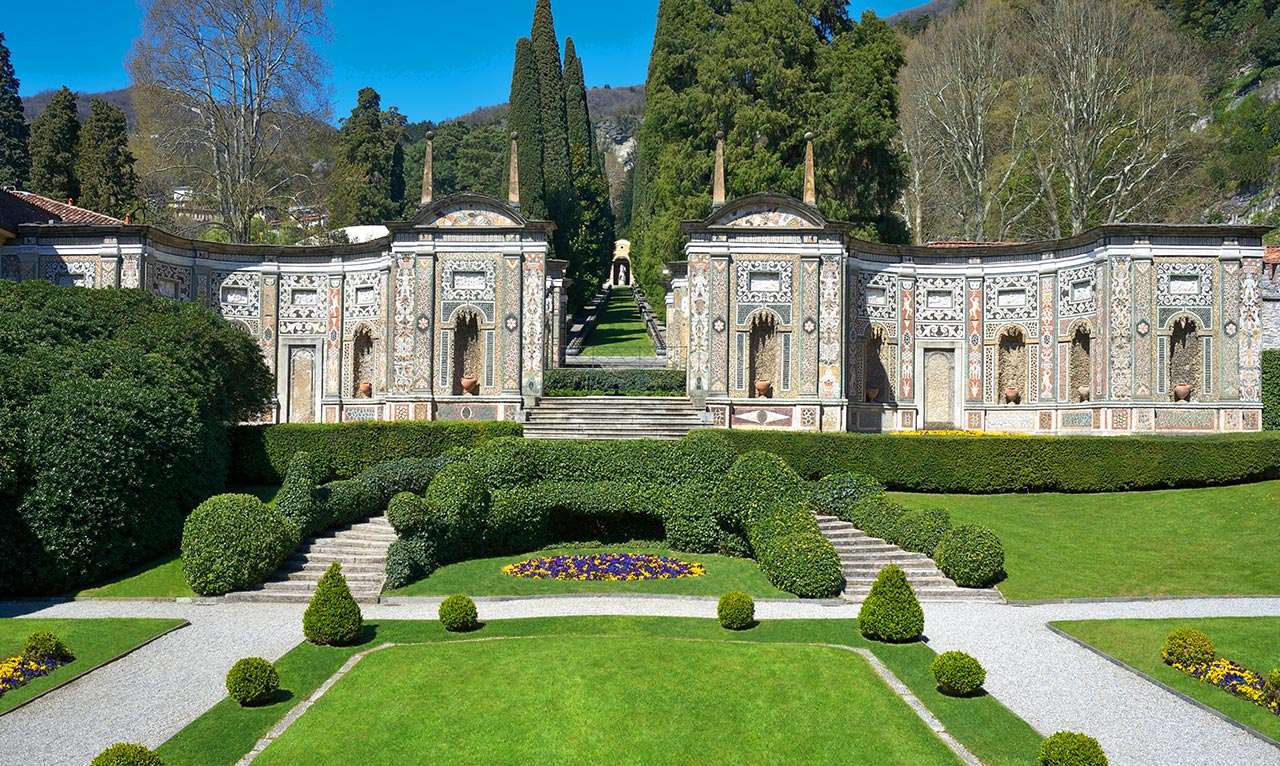
Villa d’Este in Cernobbio is one of the most internationally recognised luxury hotels in the world and among the most prestigious wedding venues on Lake Como. Originally built between 1565 and 1570 as Villa del Garovo by Cardinal Tolomeo Gallio — designed by the Mannerist architect Pellegrino Tibaldi — the property has passed through Jesuit ownership, the Odescalchi and Marliani families, and most famously Caroline of Brunswick (Princess of Wales) in 1815, before being converted into a luxury hotel in 1873. It has operated continuously as one of Europe’s defining grand hotels for over 150 years.
History & Architectural Significance
The original villa was commissioned by Cardinal Tolomeo Gallio, a Cernobbio-born ecclesiastical figure who rose to become one of the most powerful churchmen of the late Cinquecento. The architect, Pellegrino Tibaldi, was at the height of his career when he designed the villa; he later served as architect to King Philip II of Spain. The villa’s monumental nymphaeum and the water cascade descending the hillside behind the main building are among Tibaldi’s most-studied Renaissance landscape designs.
After Cardinal Gallio’s death the property passed through a sequence of noble Lombard families before becoming a Jesuit retreat between 1749 and 1769. It was acquired in 1815 by Caroline of Brunswick, estranged wife of the future George IV of the United Kingdom, who renamed the estate Nuova Villa d’Este after her supposed Este lineage and transformed the gardens in the English landscape style that still defines the property today. After Caroline’s departure in 1820, the villa changed hands again before being converted in 1873 into the luxury hotel it has remained ever since.
This continuity of historical importance and architectural quality is rare. Villa d’Este is one of the few European venues where guests can hold a wedding inside a building that has hosted royalty, papal cardinals, foreign diplomats, and three centuries of European social history.
Grounds & Notable Spaces
The estate occupies approximately 25 acres of historic gardens on the western shore of Lake Como, mixing Italian Renaissance formal layouts with English-style landscape designs from the Caroline of Brunswick era. The most-photographed features include:
- The Nymphaeum and water cascade — Tibaldi’s 16th-century waterworks rising up the hillside behind the main villa, a Renaissance landscape feature of significant art-historical importance.
- The Renaissance Italian garden — formal parterres, hedges, and statuary in front of the main villa.
- The English landscape garden — sweeping lawns, mature plantings, and lake views, added by Caroline of Brunswick.
- The floating pool — the hotel’s iconic open-air pool that floats on Lake Como itself, one of the property’s most distinctive features.
- The Mosaic — a historic geometric mosaic feature in the gardens, frequently used for outdoor ceremonies.
The hotel itself comprises two principal buildings: the Cardinal’s Building (the original 16th-century villa) and the Queen’s Pavilion (a later addition dating to the 19th century). Together they offer 151 rooms and suites, alongside dedicated function rooms and ballrooms for events.
Ceremony & Reception Spaces for Weddings
Villa d’Este hosts weddings across a range of indoor and outdoor settings. Specific space assignments depend on date, guest count, and ceremony type, and are confirmed with the hotel’s events team:
- Outdoor garden ceremonies — the Italian and English gardens offer multiple settings for outdoor ceremonies from late spring through early autumn.
- Historic indoor halls — frescoed reception rooms and ballrooms inside the Cardinal’s Building, used for ceremonies and seated dinners.
- Lake-facing terraces — multiple terraces overlooking Lake Como, ideal for cocktail receptions and aperitivo.
- The Sporting Club & pool area — for larger lakeside events and informal celebrations.
The hotel’s own restaurants — Veranda, Grill, Platano, Sundeck, and Bar Canova — provide catering for events, with menus drawing on Lombard and northern Italian traditions at fine-dining standards. Specific room capacities, ceremony rights, and exclusivity terms are confirmed individually with the hotel for each wedding.
Wedding Cost at Villa d’Este
Villa d’Este is one of the most expensive luxury wedding venues on Lake Como and in Italy as a whole. Pricing is bespoke and depends on date, headcount, room block size, and whether the couple opts for partial-property use or a more extensive private arrangement. The figures below reflect realistic 2026 market ranges for similar grand luxury hotels on Lake Como at comparable scale:
- Smaller wedding (40–80 guests, partial-property use): approximately €80,000–€150,000 for venue rental and event spaces alone, before catering.
- Mid-size luxury wedding (80–150 guests, with significant room block): approximately €150,000–€300,000 in venue and accommodation alone.
- Larger or more exclusive arrangements (multi-day, broad accommodation block, particularly during peak season): typically €350,000 and upward.
Catering at Villa d’Este is in-house through the hotel’s restaurant operation. Catering pricing at this tier typically runs €250–€500 per guest depending on menu, service style, and venue. A complete 100-guest wedding at Villa d’Este — venue rental, accommodation, multi-course dinner, florals, music, photography, transfers — generally falls in the range of €220,000 to €450,000+ in 2026.
For broader Lake Como wedding cost context — including comparisons with other Como venues — see our Lake Como wedding cost guide.
Civil Ceremonies & Legal Requirements
Villa d’Este is in the territory of the Comune di Cernobbio, which performs civil ceremonies at its town hall and, by request, at certain approved private venues. Whether Villa d’Este is currently on the comune’s list of approved on-site civil ceremony venues should be confirmed directly with the Comune di Cernobbio at the time of planning, as accreditations and conditions are periodically reviewed. A separate municipal fee applies in any case.
Foreign couples marrying civilly in Italy must provide:
- A nulla osta al matrimonio (no-impediment-to-marry certificate) from their country’s consulate in Italy, apostilled for signatories of the 1961 Hague Apostille Convention.
- Sworn translation of all foreign documents by a court-registered translator (traduttore giurato).
- An Italian codice fiscale, obtainable from the Agenzia delle Entrate.
- Two witnesses with valid identification at the ceremony.
- An official interpreter if either spouse does not understand Italian (mandatory by Italian law).
Symbolic ceremonies have no legal weight and require no comune involvement, allowing full creative freedom in officiant, location on the property, and timing. Many international couples legally marry in their home country before or after the Lake Como celebration, then hold a fully personalised symbolic ceremony at Villa d’Este.
Practical Logistics for a Lake Como Wedding
Villa d’Este is in Cernobbio, on the southwestern shore of Lake Como, approximately 5 kilometres north of the city of Como. The principal airports serving Lake Como are:
- Milan Malpensa (MXP) — approximately 65–70 kilometres south-west, 70–90 minutes by car depending on traffic. The main long-haul international airport for Italy.
- Milan Linate (LIN) — approximately 55–60 kilometres south, 60–75 minutes by car. Stronger European business connections; the airport most often used for helicopter transfers to the lake (typically 18–25 minutes by helicopter).
- Lugano (LUG) — approximately 30 kilometres north in Switzerland, smaller and with limited service.
- Bergamo-Orio al Serio (BGY) — approximately 85 kilometres east, dominated by low-cost European routes.
For US, UK, and long-haul international guests, Malpensa is the standard entry point. The hotel coordinates airport transfers including private cars, mini-buses, and helicopter arrivals at Cernobbio for the most discerning logistical requirements.
Cernobbio’s historic centre has a ZTL (Zona a Traffico Limitato), but Villa d’Este itself is a private gated property and is not subject to the ZTL for hotel guests. Boat transfers between Villa d’Este and other points around Lake Como are easy and commonly used during weddings.
Best Months for a Villa d’Este Wedding
Lake Como has a milder climate than the Adriatic or Sicilian destinations and operates on a more compressed wedding season. The optimal months for a Villa d’Este wedding are May, June, and mid-September to early October, when daytime temperatures sit comfortably between 20 and 27°C, evenings are warm enough for outdoor receptions, and the lake light is at its best. Late April and late October are increasingly chosen for shoulder-season weddings.
Avoid: November through March, when Lake Como is cold, frequently foggy, and many surrounding venues operate on a reduced schedule. August is workable but coincides with peak Italian holiday traffic and full hotel occupancy that can make exclusivity arrangements more difficult.
It is worth noting that Villa d’Este hosts two major annual events that effectively close the calendar to weddings: the Concorso d’Eleganza Villa d’Este (vintage and concept cars, traditionally late May) and the Ambrosetti Forum (international economic conference, traditionally early September). These dates should be checked early in the planning process, as they take precedence over wedding bookings.
Comparison with Other Lake Como Luxury Venues
Within Lake Como itself, the most direct comparisons for Villa d’Este are Grand Hotel Tremezzo on the western shore (similar grand hotel format, more contemporary atmosphere) and Villa Sola Cabiati (smaller, more aristocratic palazzo character, operated in conjunction with Grand Hotel Tremezzo). For couples wanting a heritage villa ceremony without the grand hotel footprint, Villa del Balbianello (FAI-owned heritage site) and Villa Pizzo are alternatives, both with distinct architectural identities and access constraints.
What distinguishes Villa d’Este for the right couple: the combination of a 16th-century cardinal’s villa, 25-acre historic park with both Renaissance and English garden traditions, full luxury hotel infrastructure for accommodating the wedding party in a single property, an established multi-restaurant catering operation, and continuous operation as one of Europe’s leading grand hotels for over 150 years.
Planning Recommendations
If you are considering Villa d’Este for your wedding, the realistic planning approach is:
- 18–24 months ahead: initial enquiry, particularly for peak-season Saturdays. Villa d’Este’s wedding pipeline fills exceptionally early given the limited number of Saturdays available, and conflicts with the Concorso d’Eleganza and Ambrosetti Forum dates must be checked.
- 12–14 months ahead: contract, deposit, room block reserved.
- 8–10 months ahead: vendor curation (photography, florals, music, hair & makeup, officiant), legal-document research begins for foreign couples.
- 4–6 months ahead: detailed event programme, menu tasting, accommodation block confirmation.
- 2–3 months ahead: legal document submission to the Comune di Cernobbio for civil ceremonies, transfer planning, helicopter coordination if applicable.
- 2 weeks ahead: rehearsal walk-through, vendor confirmations, welcome bag preparation, weather contingency review.
For a complete Lake Como wedding planning context — including comparisons between Villa d’Este and other Como venues — see our Lake Como Wedding Cost Guide and our How to Plan a Wedding in Italy.
Frequently Asked Questions
When was Villa d’Este built and who designed it?
Villa d’Este was built between 1565 and 1570 as Villa del Garovo, commissioned by Cardinal Tolomeo Gallio and designed by the Mannerist architect Pellegrino Tibaldi. It was renamed Nuova Villa d’Este in 1815 by Caroline of Brunswick, who reshaped the gardens in the English landscape style. The estate was converted to a luxury hotel in 1873 and has operated continuously ever since.
How many rooms does Villa d’Este have?
Villa d’Este has 151 rooms and suites across the Cardinal’s Building (the original 16th-century villa) and the Queen’s Pavilion (a 19th-century addition). The full property occupies approximately 25 acres of historic Renaissance and English landscape gardens on the western shore of Lake Como.
How much does a wedding at Villa d’Este cost?
Villa d’Este is among the most expensive luxury wedding venues on Lake Como. Realistic 2026 ranges: smaller weddings (40–80 guests, partial property) approximately €80,000–€150,000 for venue alone; mid-size weddings (80–150 guests, multi-day with room block) €150,000–€300,000 in venue and accommodation. A complete 100-guest wedding — venue rental, accommodation, catering, florals, music, photography, transfers — generally falls between €220,000 and €450,000+ depending on programming and vendor tier. The hotel quotes individually for each event.
Can foreign couples legally marry at Villa d’Este?
Civil ceremonies require an officiant from the Comune di Cernobbio. Whether the ceremony can take place on the Villa d’Este grounds, or must take place at the comune town hall, should be confirmed directly with the Comune di Cernobbio at the time of planning, as on-site civil ceremony accreditations are periodically reviewed. Foreign couples need a nulla osta from their country’s consulate in Italy, sworn-translated documents, an Italian codice fiscale, and an interpreter if needed. Symbolic ceremonies have complete creative freedom and require no comune involvement.
Which is the closest airport to Villa d’Este?
Milan Malpensa (MXP) is approximately 65–70 km south-west of Cernobbio, 70–90 minutes by car, and is the main long-haul international airport for Italy. Milan Linate (LIN) is approximately 55–60 km south, 60–75 minutes by car, and is the most commonly used airport for helicopter transfers to Lake Como (18–25 minutes by helicopter). Lugano (LUG) in Switzerland is closer at approximately 30 km but has limited service.
What is the best time of year for a Villa d’Este wedding?
May, June, and mid-September to early October are the optimal months. Daytime temperatures sit between 20 and 27°C and evenings remain warm enough for outdoor receptions. Late April and late October are increasingly chosen for shoulder-season weddings. Avoid November through March (cold, fog, reduced operations) and check the calendar carefully against the Concorso d’Eleganza Villa d’Este (late May) and the Ambrosetti Forum (early September), both of which close the property to weddings.
What annual events does Villa d’Este host?
Villa d’Este hosts the Concorso d’Eleganza Villa d’Este, one of the world’s most prestigious vintage and concept car shows, traditionally held over a weekend in late May, and the Ambrosetti Forum, a major international economic and political conference, traditionally held in early September. Both events occupy the entire property and take precedence over wedding bookings.
How far in advance should we book Villa d’Este?
For peak-season Saturdays (May, June, late September, early October), Villa d’Este should be approached 18 to 24 months in advance. The hotel’s wedding pipeline fills early, and conflicts with the Concorso d’Eleganza and Ambrosetti Forum dates must be verified at the initial enquiry. Mid-week and shoulder-season dates often have shorter lead times of 12 to 14 months.
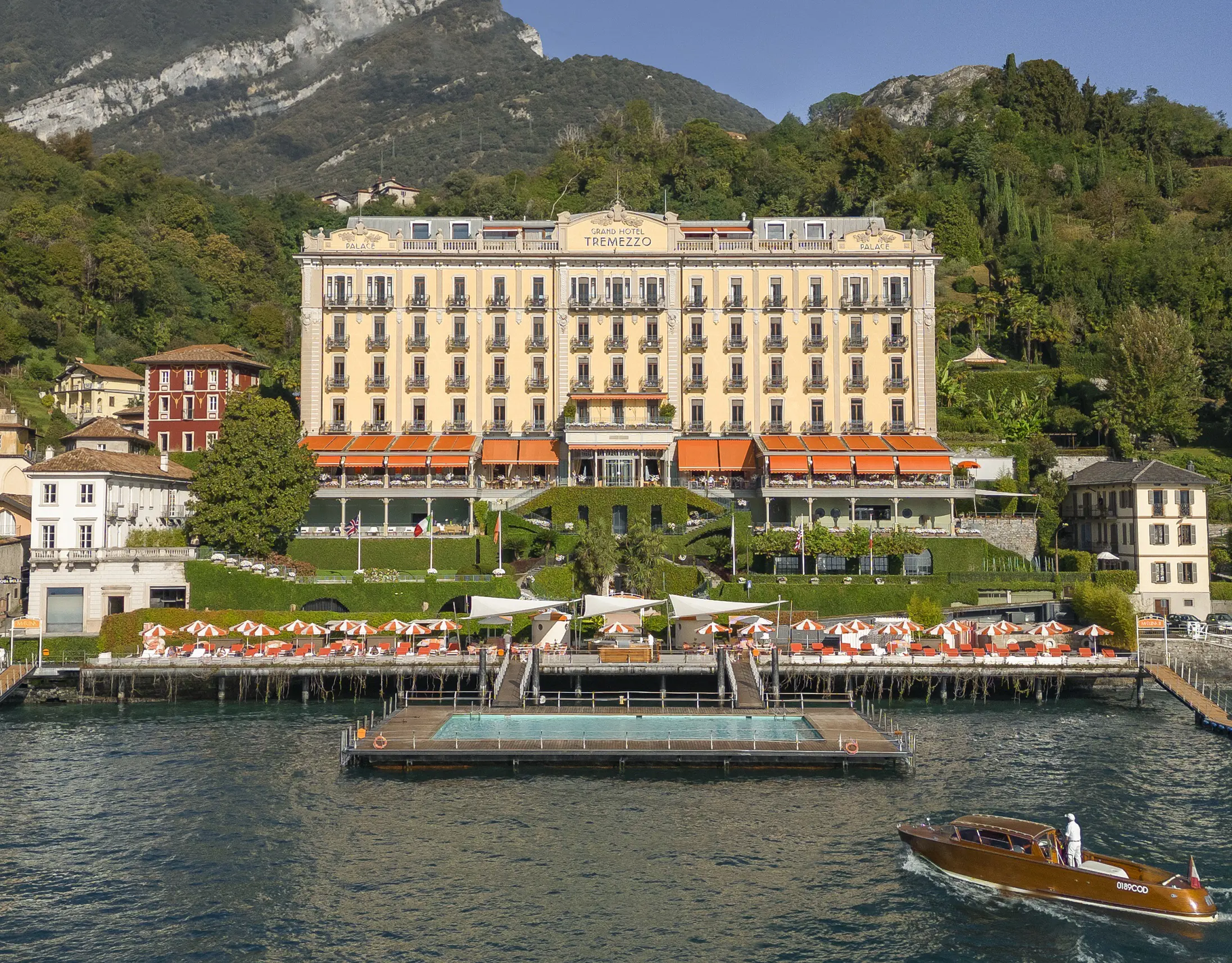
Grand Hotel Tremezzo has stood on the western shore of Lake Como since 1910, and remains one of the handful of Belle Époque grand hotels on the lake still run by the family that has owned it for half a century. Its most photographed feature — a swimming pool that floats directly on the lake itself — has become one of the defining images of contemporary Lake Como luxury, but the hotel’s real distinction as a wedding venue lies in its combination of century-old architecture, a genuinely panoramic view across to Bellagio, and third-generation family ownership that treats the property as a living inheritance rather than a managed asset.
A Belle Époque Hotel Built in 1910
The hotel was built between 1908 and 1910 and opened its doors on 10 July 1910, commissioned by Enea Gandola, a hotelier from Bellagio who purchased the land — formerly part of the grounds of Villa Poncetta — in 1907, together with his wife Maria Orsolini Bolla. No architect is definitively named in available records, including the hotel’s own historical materials, so this should be treated as an open question rather than an attributed design. What is well documented is the ambition of the original building: soaring ceilings and ornate balconies in the Belle Époque, or Liberty, style then fashionable across Italy, paired with genuinely modern touches for 1910 — two lift, and an illuminated electric sign, both notable novelties for a lakeside hotel at the time.
From the Gandola Family to Three Generations of De Santis
Ownership passed from the Gandola family to the Sampietro family in the 1930s, who ran the hotel through the difficult years of the Second World War. In 1973, the De Santis family acquired the property — the grandfather of Valentina De Santis, who now serves as the hotel’s owner and CEO. Valentina joined the family business in 2010, the hotel’s centenary year, and became the first woman to lead it; she now represents the third generation of De Santis stewardship. This continuity of family ownership across five decades is part of what distinguishes Grand Hotel Tremezzo from lake properties that have passed through successive corporate hospitality groups.
The Floating Pool and the T Spa
The hotel’s signature feature is its floating swimming pool — sometimes referred to in hotel materials as the “Wow” or water-on-water pool — which sits directly on the surface of Lake Como in front of the property’s private beach, oriented toward Bellagio and the Grigne mountain range beyond. No source could confirm the exact year this pool was added; hotel materials suggest ongoing renovation work accelerated around the 2010 centenary, but this is inference rather than a documented fact, and no specific installation date should be stated in any public-facing copy.
The hotel’s T Spa occupies more than 10,000 square feet and includes five treatment rooms, a Hammam suite finished in white Lasa marble, a 15-metre heated infinity pool, and a three-storey gym. The spa maintains a partnership with Officina Profumo-Farmaceutica di Santa Maria Novella, the historic Florentine pharmacy, for its treatment products — a detail that fits the hotel’s broader positioning as a heritage property rather than a contemporary wellness resort.
Villa Emilia and a Note on Villa Passalacqua
An 18th-century annexed property, Villa Emilia, houses the hotel’s Suite Emilia, which has direct access to the spa facilities. It’s worth noting — since the two are sometimes confused in secondary sources — that Villa Passalacqua is a separate, related but distinct 18th-century hotel property nearby, also under De Santis family ownership but operated independently from Grand Hotel Tremezzo itself; historical claims about famous guests (Winston Churchill among them) are associated with Villa Passalacqua specifically, not with the main Tremezzo hotel building. Claims that Napoleon Bonaparte stayed at Grand Hotel Tremezzo are demonstrably false — Napoleon died in 1821, 89 years before the hotel opened — and should never appear in any description of the property. The actress Greta Garbo is a confirmed historical guest of the hotel itself.
Weddings at Grand Hotel Tremezzo
Wedding capacity figures for the hotel circulate primarily through wedding-planning sources rather than the hotel’s own published materials, and should be treated as indicative rather than confirmed: the Sala Regina is commonly cited at up to 120 guests for a seated dinner with dancing, a glass-walled lakeside terrace at around 60, garden ceremonies at up to approximately 80, and additional function rooms ranging from 40 to 110 depending on configuration. Couples should confirm exact numbers and room availability directly with the hotel when planning, as these secondary-source figures can shift with the property’s own event-planning practices.
What the hotel offers unambiguously is the view: the property sits directly on Lake Como looking toward Bellagio, with the Grigne mountains rising behind — one of the most consistently photographed sightlines on the lake, and the natural backdrop for both the floating pool and the hotel’s principal outdoor event spaces.
Location and Access
Grand Hotel Tremezzo is in Tremezzina, on Lake Como’s western shore. From Milan’s Malpensa Airport, the drive is approximately 79 kilometres, roughly 1 hour and 12 minutes. Linate Airport’s exact distance to Tremezzo could not be independently confirmed from available sources — as a general reference, Linate to Malpensa itself is about 57 kilometres and under an hour, suggesting a broadly comparable or somewhat shorter transfer than from Malpensa, though this should be treated as an estimate rather than a confirmed figure. From Como town, the hotel is about 22 kilometres by road, roughly 37 minutes by car, or approximately 39 minutes by lake ferry, with Navigazione Laghi services running roughly every two hours along this stretch of the lake.
The Lake Como wedding season runs broadly from March through early October, with April, May, June, September, and the first half of October generally considered the most favourable months for weather and light. For the full picture of costs and venue options across the lake, see our Lake Como wedding cost guide.
Frequently Asked Questions
When was Grand Hotel Tremezzo built and who owns it today?
Grand Hotel Tremezzo was built in 1908–1910 and opened on 10 July 1910, commissioned by hotelier Enea Gandola and his wife Maria Orsolini Bolla. Ownership passed to the Sampietro family in the 1930s, then to the De Santis family in 1973. Valentina De Santis, granddaughter of the family’s original acquiring generation, joined the business in 2010 — the hotel’s centenary — and now leads it as owner and CEO, the first woman to do so and the third generation of De Santis stewardship.
What is the floating pool at Grand Hotel Tremezzo?
The hotel’s signature feature is a swimming pool that floats directly on the surface of Lake Como, positioned in front of the property’s private beach with views across to Bellagio and the Grigne mountains. It has become one of the most recognisable images associated with the hotel, though its exact installation date is not documented in available sources.
Did Napoleon or Winston Churchill stay at Grand Hotel Tremezzo?
No — the claim that Napoleon Bonaparte stayed at the hotel is factually impossible, since he died in 1821, 89 years before the hotel opened in 1910. Winston Churchill is associated with Villa Passalacqua, a separate De Santis-owned property nearby, not with Grand Hotel Tremezzo itself. A confirmed historical guest of Grand Hotel Tremezzo is the actress Greta Garbo.
How far is Grand Hotel Tremezzo from Milan and from Como town?
From Milan Malpensa Airport, the drive is approximately 79 kilometres, around 1 hour 12 minutes. From Como town, the hotel is roughly 22 kilometres by road (about 37 minutes by car) or approximately 39 minutes by lake ferry, with regular Navigazione Laghi services along the western shore.
Let’s Make Your Wedding Day Unforgettable
Your dream wedding deserves nothing less than perfection.
With our expertise, exclusive venues, and impeccable attention to detail, we bring your vision to life—seamlessly, elegantly, and stress-free.
Book a Consultation Today!
All information requested is mandatory.
Thank you!
We only accept requests with a minimum wedding spending of € 150.000
This site is protected by Google reCAPTCHA v3,
Google’s Privacy Policy and Terms of Service.
Weddings in Lake Como FAQs
Can UK couples legally marry in Lake Como?
Do I need a wedding planner for a Lake Como wedding?
How far in advance should I book a Lake Como wedding?
How much does a wedding in Lake Como cost?
What’s the best season for a Lake Como wedding?
Still have questions?