
Luxury Portofino Weddings by Giorgia Fantin Borghi
Portofino is more than a destination: it’s the closest one can get to Paradise on Earth. This jewel of the Italian Riviera offers an enchanting blend of coastal splendour, historic grandeur, and discreet luxury.
For those who dream of a wedding where every detail is a masterpiece, Giorgia Fantin Borghi and her team transform your vision into an unforgettable reality.
With over 20 years of expertise in luxury hospitality, event artistry, and etiquette, we craft weddings that transcend the ordinary—where emotion, ambience, and flawless execution intertwine seamlessly.
The Allure of Portofino: the Idyllic Italian Countryside
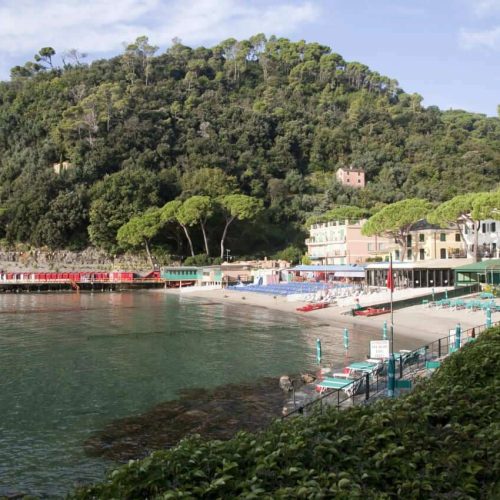

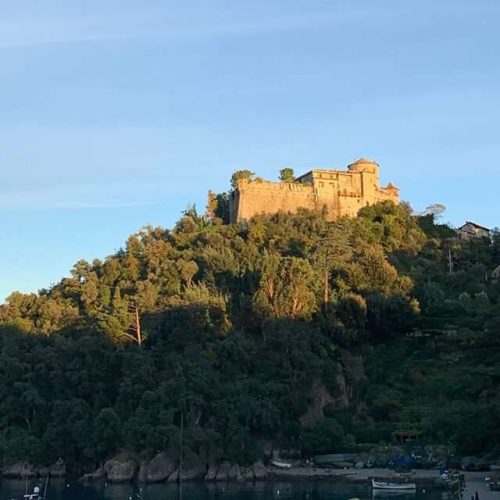
Portofino is synonymous with understated elegance and privacy, offering the most coveted venues for luxury celebrations. From sun-drenched terraces to intimate Renaissance gardens, we ensure that every setting is as breathtaking as the love story it honours.
Beyond its stunning scenery, Portofino offers a stress-free path to luxury. With our expert planners handling every detail, from securing elite venues to coordinating seamless logistics, you can enjoy a flawless wedding experience without the hassle of overseas planning.
Whether you envision an intimate wedding or a lavish affair, Portofino promises an effortlessly stylish, sun-soaked wedding or honeymoon that exceeds every expectation.
Curating Your Portofino Wedding with Soulful Elegance

Giorgia Fantin Borghi is a master in the art of hosting, ensuring that each wedding reflects the highest level of craftsmanship, etiquette, and refinement.
Our signature approach blends tradition with innovation, resulting in flawless, breathtaking celebrations.
Bespoke Wedding Planning & Design
We bring your vision to life with exquisite aesthetics, floral artistry, and impeccable styling, ensuring a truly unforgettable celebration.

Venue Selection & Coordination
We can help you find the perfect backdrop for your wedding day, whether it’s a grand lakeside villa or an intimate garden estate.
Luxury Vendor & Catering Management
We partner with Italy’s top chefs, florists, and photographers to ensure every element of your day reflects elegance and refinement.
Guest Experience & Travel Coordination
From VIP travel arrangements to curated pre- and post-wedding events, we create an immersive experience for you and your guests.
Ceremony Planning & Legal Assistance
We take care of all legal requirements and paperwork for UK couples, whether you choose a civil, religious, or symbolic ceremony—making the process effortless and stress-free.
A Curated Selection of Portofino’s Most Enchanting Wedding Venues
Wedding receptions in Portofino can create lifetime memories with these exclusive venues offering breathtaking views:
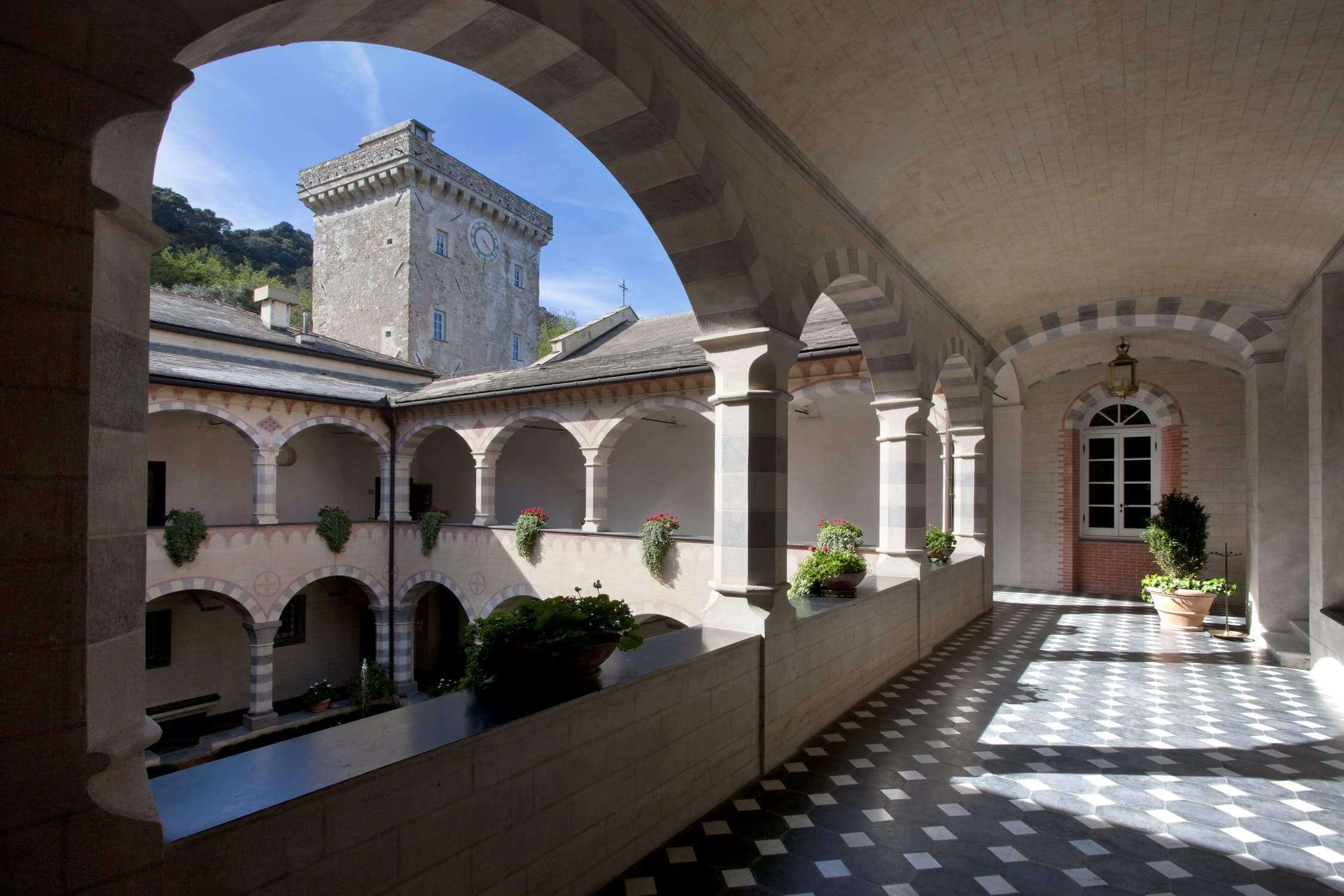
Abbazia della Cervara (also known as Abbey of Cervara) is a 14th-century former Benedictine monastery on the Ligurian coast between Santa Margherita Ligure and Portofino — among the most historically significant private wedding venues on the Italian Riviera. Founded in 1361, designated a national monument in 1912, and the site where French king Francis I was imprisoned in 1525 after his defeat at the Battle of Pavia, the abbey today hosts weddings, concerts, and cultural events from its privately-owned cliff-side gardens overlooking the sea. The Giardino all’italiana on the property is documented as the only monumental Italian garden preserved on the Ligurian Riviera that faces directly to the sea.
History & Cultural Significance
The monastery was established in 1361 by Ottone Lanfranco, a priest from the church of Santo Stefano in Genoa, on land owned by the Carthusian monks and dedicated to Saint Jerome. The community was transferred to the Benedictines of Monte Cassino around 1420 by Pope Eugene IV, who reassigned the property to the Cassinese congregation. The complex was elevated to abbey status in 1546 — the formal recognition that anchors its name today (abbazia).
The defining historic moment in the abbey’s biography is the brief imprisonment of King Francis I of France in 1525. After his defeat at the Battle of Pavia by the imperial forces of Charles V, Francis I was transported toward Spain via Genoa, and was held at Cervara for approximately a week en route. A restored plaque at the abbey commemorates the king’s reported words on the campaign: “All is lost, except honor” — one of the most-cited utterances in early-modern European history and the source of the abbey’s claim to a place in international political memory.
The abbey passed through several religious orders across the centuries: French Trappists held it from 1804 to 1811 during the Napoleonic suppressions, the Somaschi Fathers from 1871, and French Carthusians from 1901 to 1937. The complex was designated a national monument in 1912, anchoring its status as protected Italian cultural heritage. It is today privately owned and operates as a cultural and event venue.
Architecture & Notable Features
The architectural fabric of Cervara spans the 14th through 17th centuries, with documented features including:
- The 16th-century cloister — the principal interior architectural space, used for atmospheric photography and intimate ceremonies.
- The Latin cross church — the abbey’s principal religious building, retaining its medieval-Renaissance liturgical character.
- The defensive tower — built historically as protection against Saracen pirates who raided the Ligurian coast in the medieval and early-modern period.
- The Italian garden (Giardino all’italiana) — the only monumental Italian garden preserved on the Italian Riviera that faces directly to the sea. A protected horticultural and architectural artefact in its own right.
- The cliff-side terraces — descending from the abbey toward the Ligurian coast, with views toward Portofino’s promontory and the Gulf of Tigullio.
The combination of religious-historic architecture, the unique sea-facing Italian garden, and the cliff-top position above the Portofino coast distinguishes Cervara from any other Riviera wedding venue. The garden’s status as the only monumental sea-facing Giardino all’italiana on the Riviera makes it among the most photographically distinctive backdrops on the Italian coast.
Wedding Ceremony & Reception Spaces
For couples considering Abbazia della Cervara, the principal wedding spaces are:
- The Italian garden (Giardino all’italiana) — the most-requested ceremony space, with its formal geometric plantings and sea-facing position. The defining backdrop of any Cervara wedding.
- The 16th-century cloister — used for intimate ceremonies, atmospheric receptions, and weather contingency. The historical interior most-photographed.
- The Latin cross church — available for symbolic ceremonies and for the religious-ceremony moment within an interior setting.
- The cliff-side terraces — used for cocktail receptions and aperitivo with Portofino-coast views.
- The interior halls — used for seated dinners and formal reception configurations.
Specific capacity figures vary by configuration and should be confirmed with the abbey’s events management at the time of enquiry. The property’s heritage status and physical footprint constrain larger formats — Cervara is best-suited to small to medium luxury weddings (typically 60 to 150 guests), with full-property exclusive use available for the highest-tier events.
Wedding Cost at Abbazia della Cervara
Cervara is at the upper tier of Italian Riviera wedding venues. The abbey quotes individually per event, with pricing depending on date, headcount, spaces used, and exclusivity arrangements. The figures below reflect realistic 2026 market ranges for heritage abbey venues on the Ligurian coast:
- Ceremony rental (single-space, daytime): approximately €15,000–€28,000.
- Full wedding (ceremony + reception, cloister + garden): approximately €35,000–€70,000 in venue rental, before catering.
- Larger or peak-season exclusive arrangements: typically €80,000 and upward.
Catering at Cervara is provided through approved Riviera catering vendors; quality catering at this tier typically runs €220–€420 per guest depending on menu configuration. A complete 80-guest wedding at Cervara — venue, catering, florals, music, photography, transfers — generally falls in the range of €110,000 to €240,000+ in 2026.
For broader Italian Riviera wedding context, see our Wedding Villas in Italy Guide.
Civil Ceremonies & Legal Requirements
Abbazia della Cervara is in the territory of the Comune di Santa Margherita Ligure, which performs civil ceremonies at the town hall and, by accreditation, at approved private venues. Whether Cervara is currently on the comune’s approved list for on-site civil ceremonies should be confirmed directly with the Comune di Santa Margherita Ligure at the time of planning. A separate municipal fee applies in any case.
Foreign couples marrying civilly in Italy must provide:
- A nulla osta al matrimonio (no-impediment-to-marry certificate) from their country’s consulate in Italy, apostilled for signatories of the 1961 Hague Apostille Convention.
- Sworn translation of all foreign documents by a court-registered translator (traduttore giurato).
- An Italian codice fiscale, obtainable from the Agenzia delle Entrate.
- Two witnesses with valid identification at the ceremony.
- An official interpreter if either spouse does not understand Italian (mandatory by Italian law).
For couples seeking a religious ceremony, the abbey’s Latin cross church may be available for liturgical celebrations subject to diocesan permissions — this should be confirmed directly with the venue and the relevant diocesan authority. Symbolic ceremonies have no legal weight and require no comune involvement, allowing full creative freedom in the Italian garden, cloister, or terraces.
Practical Logistics for a Portofino-Coast Wedding
Abbazia della Cervara sits on the coastal road between Santa Margherita Ligure and Portofino, on the eastern Ligurian Riviera. The principal airports for international guests are:
- Genoa Cristoforo Colombo (GOA) — approximately 40 kilometres west, 45 to 60 minutes by car. The closest international airport.
- Milan Malpensa (MXP) — approximately 220 kilometres north-west, 2.5 to 3 hours by car or accessible via high-speed train to Genoa Piazza Principe followed by transfer.
- Pisa Galileo Galilei (PSA) — approximately 180 kilometres south-east, 2 to 2.5 hours by car.
From Genoa, transfer to Cervara runs via the coastal A12 motorway and the SP227 (the Strada Provinciale di Portofino) — the same scenic but slow coastal road that connects Santa Margherita Ligure with Portofino itself. In summer the road can be congested. Boat transfers from Santa Margherita Ligure or from Rapallo are an atmospheric alternative for shorter coastal journeys.
ZTL Portofino: vehicle access into the village centre of Portofino is severely restricted during peak season, and parking is limited. Wedding cars, transfer vehicles, and guest taxis require coordination with the comune. Cervara’s position outside the village proper means access is more flexible than Portofino-itself venues, but transfer planning still benefits from a planner familiar with the coast.
Best Months for a Cervara Wedding
The optimal months for an Abbazia della Cervara wedding are May, June, late September, and October, when daytime temperatures sit between 20 and 27°C and the Italian garden is at its peak. The Ligurian Riviera benefits from a mild Mediterranean climate, but the cliff-side position means evening receptions in shoulder season require contingency for breeze off the Gulf of Tigullio.
Avoid: August — peak Italian holiday traffic on the Riviera with severe SP227 road congestion and crowded Portofino village; November through March, when the abbey may operate on a reduced calendar (confirm exact opening and event availability at the time of enquiry).
Comparison with Other Italian Riviera Venues
Within the Portofino coast, the closest comparable luxury venues for Cervara are:
- Castello Brown — medieval castle overlooking Portofino harbour, used as a wedding venue with its iconic position above the village.
- Hotel Splendido (Belmond) — five-star clifftop hotel above Portofino, full hotel-format luxury wedding venue.
- Villa Durazzo Centurione — historic villa in Santa Margherita Ligure with formal gardens.
- Paraggi Beach — the small beach venue between Santa Margherita Ligure and Portofino, used for intimate beach-side ceremonies.
What distinguishes Cervara: the medieval-Renaissance abbey architecture (14th-17th century), the historic association with Francis I of France and the Battle of Pavia, the only monumental sea-facing Giardino all’italiana on the Italian Riviera, the national monument designation, and the privacy of a cliff-side former monastery rather than a hotel or village-centre venue. The property suits couples whose vision is a historic-architectural wedding with strong cultural narrative rather than a conventional luxury hotel celebration.
Planning Recommendations
If you are considering Abbazia della Cervara for your wedding, the realistic planning approach is:
- 12–16 months ahead: initial enquiry with the abbey’s events management. Cervara hosts a limited number of weddings per year as a heritage site, and peak-season Saturdays (May, June, late September, October) book earliest.
- 9–10 months ahead: contract, deposit, parallel hotel block reservations in Santa Margherita Ligure or Portofino.
- 6–8 months ahead: vendor curation (photography familiar with Riviera light, florals, music, hair & makeup, officiant), catering selection from approved Riviera vendors.
- 3–5 months ahead: legal-document research for foreign couples, transfer planning including ZTL Portofino considerations.
- 2–3 months ahead: document submission to the Comune di Santa Margherita Ligure for civil ceremonies, final transfer coordination.
- 2 weeks ahead: rehearsal walk-through, vendor confirmations, welcome bag preparation, weather contingency review.
For a complete Italian wedding planning context, see our How to Plan a Wedding in Italy and our Wedding Villas in Italy Guide.
Frequently Asked Questions
When was Abbazia della Cervara founded?
The monastery was established in 1361 by Ottone Lanfranco, a priest from the church of Santo Stefano in Genoa, on land owned by the Carthusian monks and dedicated to Saint Jerome. The community was transferred to the Benedictines of Monte Cassino around 1420 by Pope Eugene IV, and the complex was elevated to abbey status in 1546.
Who was imprisoned at Abbazia della Cervara?
King Francis I of France was imprisoned at Cervara for approximately a week in 1525, following his defeat at the Battle of Pavia by the imperial forces of Charles V. He was being transported toward Spain via Genoa. A restored plaque at the abbey commemorates the king’s reported words: “All is lost, except honor” — one of the most-cited utterances in early-modern European history.
Where is Abbazia della Cervara located?
Cervara is located on the coastal road between Santa Margherita Ligure and Portofino, on the eastern Ligurian Riviera in northern Italy. It sits cliff-side above the Gulf of Tigullio, with views toward Portofino’s promontory.
What is special about the gardens at Cervara?
The abbey’s Italian garden (Giardino all’italiana) is documented as the only monumental Italian garden preserved on the Italian Riviera that faces directly to the sea. The formal geometric plantings combined with the cliff-side coastal position make it among the most photographically distinctive backdrops on the Italian coast — and the most-requested ceremony space at the property.
Is Abbazia della Cervara a protected monument?
Yes — Cervara was designated a national monument in 1912 and is protected Italian cultural heritage. The complex preserves a 16th-century cloister, a Latin cross church, and a defensive tower originally built as protection against Saracen pirates who raided the Ligurian coast in the medieval and early-modern period.
How much does a wedding at Cervara cost?
Indicative 2026 ranges: ceremony rental (single-space, daytime) approximately €15,000–€28,000; full wedding (ceremony + reception, cloister + garden) €35,000–€70,000 in venue rental; larger peak-season exclusive arrangements typically €80,000+. A complete 80-guest wedding at Cervara — venue, catering (€220–€420 per guest), florals, music, photography, transfers — generally falls between €110,000 and €240,000+ in 2026.
Can foreign couples legally marry at Abbazia della Cervara?
Civil ceremonies require an officiant from the Comune di Santa Margherita Ligure. Whether the ceremony can take place on the Cervara grounds — or must take place at the comune town hall — should be confirmed directly with the Comune di Santa Margherita Ligure at the time of planning. Foreign couples need a nulla osta (no-impediment certificate) from their country’s consulate in Italy, sworn-translated documents, an Italian codice fiscale, and an interpreter if needed. The abbey’s Latin cross church may also be available for religious ceremonies subject to diocesan permissions.
Which is the closest airport to Cervara?
Genoa Cristoforo Colombo (GOA) is approximately 40 kilometres west of Cervara, 45 to 60 minutes by car. Milan Malpensa (MXP) is approximately 220 kilometres north-west (2.5 to 3 hours by car, or accessible via high-speed train to Genoa Piazza Principe plus transfer). Pisa Galileo Galilei (PSA) is approximately 180 kilometres south-east (2 to 2.5 hours by car). Boat transfers from Santa Margherita Ligure or Rapallo are an atmospheric alternative for shorter coastal journeys.

Castello Brown is a former Genoese coastal fortress dating from around 400 AD — one of the most historically significant defensive structures on the Italian Riviera, set above the harbour of Portofino with panoramic views over the Gulf of Tigullio. Originally Roman in foundation and expanded in 1557, the castle was one of two key coastal fortresses of the Republic of Genoa and historically known as Castello di San Giorgio. Acquired in 1870 by British consul Montague Yeats-Brown — whose family name became attached to the property — it was sold to the City of Portofino in 1961 and today operates as a public museum and cultural venue, used for private events including weddings.
History & Cultural Significance
The structure was built around 400 AD with Roman fortifications and expanded into its current footprint in 1557, when Genoese military engineering reinforced the coastal fortress against the Mediterranean naval threats of the late Renaissance. The castle functioned as a coastal fort for the Republic of Genoa across centuries, withstanding attacks from Genoese, Venetian, and British forces across the 13th through 19th centuries — one of two key coastal fortresses of the Genoese maritime republic that defended the eastern Ligurian coast against rival powers.
The castle was historically known as Castello di San Giorgio — the name reflecting its dedication to Saint George, the patron of military orders in medieval Mediterranean tradition. The current name “Castello Brown” derives from Montague Yeats-Brown, the British consul who purchased the property from the Italian State in 1870 for the sum of 7,000 lire. The Yeats-Brown family adapted the medieval military architecture into a late-19th-century private villa — the layering of Roman foundations, Renaissance military expansion, and Victorian villa conversion that defines the castle’s contemporary character.
In 1949, the property was acquired by Jocelyn and John Baber, who continued the private stewardship. In 1961, the castle was sold to the City of Portofino (Comune di Portofino), and today the municipality operates Castello Brown as a public museum and cultural venue — open for public visits and available for private events.
Architecture & Notable Features
Castello Brown preserves an architectural sequence spanning nearly sixteen centuries of Ligurian history:
- Roman foundations dating from around 400 AD — the earliest documented stratum of the structure.
- The 1557 expansion — the major Genoese military intervention that gave the castle its current footprint, designed for harbour defence against naval threats.
- The 19th-century villa conversion — the Yeats-Brown adaptation of the medieval-military fabric into a private residential villa, which softened the fortress into a residence while preserving its defensive walls.
- The panoramic terraces — overlooking the Portofino harbour, the village, and the Gulf of Tigullio. Among the most-photographed viewpoints on the Italian Riviera.
- The interior salons — preserving the Victorian-villa character within the medieval-military exterior.
- The gardens — terraced plantings descending around the castle, with views toward the Portofino headland and the Mediterranean.
The combination of Roman, Renaissance-military, and Victorian-residential architecture is unique on the Italian Riviera. No other venue in the Portofino area condenses sixteen centuries of architectural history into a single small footprint — and no other position commands the Portofino harbour view as directly.
Wedding Ceremony & Reception Spaces
For couples considering Castello Brown, the principal wedding spaces are:
- The panoramic terraces — the most-requested ceremony location, with the Portofino harbour and Gulf of Tigullio as the backdrop. Among the most iconic ceremony settings on the Italian Riviera.
- The interior Victorian salons — used for seated dinners, intimate receptions, and weather contingency.
- The terraced gardens — used for cocktail receptions and aperitivo before the formal dinner.
- The medieval courtyard and walls — atmospheric photography backdrops drawing on the castle’s military-architectural history.
Specific capacity figures, layouts, and exclusive-use options should be confirmed directly with the Comune di Portofino’s events management at the time of enquiry. The castle’s heritage status, hilltop position, and the access path up from Portofino village mean Castello Brown is best-suited to small to medium luxury weddings (typically 40 to 100 guests) rather than larger formats — a constraint that becomes part of the property’s exclusive character.
Wedding Cost at Castello Brown
Castello Brown is at the upper tier of Italian Riviera wedding venues. The municipality quotes individually per event, with pricing depending on date, headcount, spaces used, and exclusive-use arrangements. The figures below reflect realistic 2026 market ranges for municipal heritage venues on the Ligurian Riviera:
- Ceremony rental (single-space, daytime): approximately €10,000–€22,000.
- Full wedding (ceremony + reception, terraces + salons): approximately €25,000–€55,000 in venue rental, before catering.
- Larger or peak-season exclusive arrangements: typically €60,000 and upward.
Catering at Castello Brown is provided through approved Portofino-area catering vendors; quality catering at this tier typically runs €220–€420 per guest depending on menu configuration. A complete 80-guest wedding at Castello Brown — venue, catering, florals, music, photography, transfers — generally falls in the range of €100,000 to €220,000+ in 2026.
For broader Italian Riviera wedding context, see our Wedding Villas in Italy Guide.
Civil Ceremonies & Legal Requirements
Castello Brown is owned and managed by the Comune di Portofino. Civil ceremonies in the comune’s territory are performed by a municipal officiant, and Castello Brown — as a municipal heritage property — is well-positioned for on-site civil ceremonies. The specific accreditation status and available ceremony locations within the property should be confirmed directly with the Comune di Portofino at the time of planning. A separate municipal fee applies.
Foreign couples marrying civilly in Italy must provide:
- A nulla osta al matrimonio (no-impediment-to-marry certificate) from their country’s consulate in Italy, apostilled for signatories of the 1961 Hague Apostille Convention.
- Sworn translation of all foreign documents by a court-registered translator (traduttore giurato).
- An Italian codice fiscale, obtainable from the Agenzia delle Entrate.
- Two witnesses with valid identification at the ceremony.
- An official interpreter if either spouse does not understand Italian (mandatory by Italian law).
Symbolic ceremonies have no legal weight and require no comune involvement, allowing full creative freedom on the panoramic terraces, in the Victorian salons, or in the medieval courtyard.
Practical Logistics for a Portofino Wedding
Portofino is one of the most logistically constrained luxury wedding destinations in Italy. The village is a small, protected harbour with narrow approach roads and severe vehicle restrictions. The principal airports for international guests are:
- Genoa Cristoforo Colombo (GOA) — approximately 40 kilometres west, 45 to 60 minutes by car. The closest international airport.
- Milan Malpensa (MXP) — approximately 220 kilometres north-west, 2.5 to 3 hours by car or accessible via high-speed train to Genoa Piazza Principe followed by transfer.
- Pisa Galileo Galilei (PSA) — approximately 180 kilometres south-east, 2 to 2.5 hours by car.
From Genoa, transfer to Portofino runs via the coastal A12 motorway and the SP227 (the Strada Provinciale di Portofino) — the scenic but slow coastal road that connects Santa Margherita Ligure with Portofino itself. In summer the road can be severely congested. Boat transfers from Santa Margherita Ligure or from Rapallo are an atmospheric alternative for shorter coastal journeys and bypass the road congestion.
ZTL Portofino: vehicle access into the village centre is severely restricted, and parking is very limited. Wedding cars and transfer vehicles require coordination with the Comune di Portofino. Castello Brown sits above the harbour — guests reach the castle by walking up from the village proper along the well-marked path, which includes uphill sections and stairs. Guests should be advised that appropriate footwear is essential and that the approach is part of the experience of the venue.
Best Months for a Castello Brown Wedding
The optimal months for a Castello Brown wedding are May, June, late September, and October, when daytime temperatures sit between 20 and 27°C and the Portofino harbour is at its most photographic. The Ligurian Riviera benefits from a mild Mediterranean climate, but the castle’s elevated position can be exposed to wind off the Gulf of Tigullio — evening receptions in shoulder season should plan for breeze contingency.
Avoid: August — peak Italian holiday traffic on the Riviera with severe SP227 road congestion, crowded Portofino harbour, and the village at maximum density; November through March, when the castle may operate on reduced museum hours and event availability is constrained.
Comparison with Other Portofino-Area Venues
Within the Portofino coast, the closest comparable luxury venues for Castello Brown are:
- Abbazia della Cervara — 14th-century former Benedictine monastery on the coastal road between Santa Margherita Ligure and Portofino, with the only monumental sea-facing Italian garden on the Riviera.
- Hotel Splendido (Belmond) — five-star clifftop hotel above Portofino, full hotel-format luxury wedding venue.
- Villa Durazzo Centurione — historic villa in Santa Margherita Ligure with formal gardens.
- Paraggi Beach — the small beach venue between Santa Margherita Ligure and Portofino, used for intimate beach-side ceremonies.
What distinguishes Castello Brown: the direct position above the Portofino harbour — the most iconic harbour view on the Italian Riviera — combined with sixteen centuries of layered architecture (Roman foundations, 1557 Genoese military expansion, 19th-century Victorian villa conversion), the cultural-historical narrative of the Republic of Genoa coastal defence system, and the small-scale intimacy that distinguishes a converted fortress from a hotel venue. The property suits couples whose vision is a small, history-rich Portofino wedding rather than a large hotel celebration.
Planning Recommendations
If you are considering Castello Brown for your wedding, the realistic planning approach is:
- 12–16 months ahead: initial enquiry with the Comune di Portofino’s events management. Castello Brown hosts a limited number of weddings per year as a municipal heritage site, and peak-season Saturdays (May, June, late September, October) book earliest.
- 9–10 months ahead: contract, deposit, parallel hotel block reservations in Portofino or Santa Margherita Ligure.
- 6–8 months ahead: vendor curation (photography familiar with Portofino’s harbour light, florals, music, hair & makeup, officiant), catering selection from approved Riviera vendors.
- 3–5 months ahead: legal-document research for foreign couples, transfer planning including ZTL Portofino coordination, boat-transfer feasibility review.
- 2–3 months ahead: document submission to the Comune di Portofino for civil ceremonies, final transfer coordination.
- 2 weeks ahead: rehearsal walk-through (including the approach path from the village), vendor confirmations, welcome bag preparation, weather contingency review.
For a complete Italian wedding planning context, see our How to Plan a Wedding in Italy and our Wedding Villas in Italy Guide.
Frequently Asked Questions
How old is Castello Brown?
The castle was built around 400 AD with Roman fortifications and expanded in 1557 into its current footprint. It functioned as a coastal fort for the Republic of Genoa across centuries, withstanding attacks from Genoese, Venetian, and British forces from the 13th through the 19th centuries. The structure was historically known as Castello di San Giorgio before becoming associated with the Brown name in the 19th century.
Why is it called Castello Brown?
The castle is named after Montague Yeats-Brown, the British consul who purchased the property from the Italian State in 1870 for 7,000 lire. The Yeats-Brown family adapted the medieval military architecture into a late-19th-century private villa, and the family name became attached to the property colloquially. The Brown family did not build the castle — they were 19th-century owners of a structure already nearly fifteen centuries old.
Who owns Castello Brown today?
Castello Brown was sold to the City of Portofino (Comune di Portofino) in 1961 and is today owned and managed by the municipality. It operates as a public museum and cultural venue, open to visitors and available for private events including weddings. All proceeds contribute to municipal heritage stewardship.
Where is Castello Brown located?
Castello Brown sits above the harbour of Portofino on the eastern Ligurian Riviera, in northern Italy. The castle’s elevated position overlooks the entire Portofino harbour, the village below, and the Gulf of Tigullio — making it among the most iconic viewpoints on the Italian Riviera. Guests reach the castle by walking up from the village along the well-marked path.
How much does a wedding at Castello Brown cost?
Indicative 2026 ranges: ceremony rental (single-space, daytime) approximately €10,000–€22,000; full wedding (ceremony + reception, terraces + salons) €25,000–€55,000; larger peak-season exclusive arrangements typically €60,000+. A complete 80-guest wedding at Castello Brown — venue, catering (€220–€420 per guest), florals, music, photography, transfers — generally falls between €100,000 and €220,000+ in 2026.
Can foreign couples legally marry at Castello Brown?
Yes — Castello Brown is owned by the Comune di Portofino, making it well-positioned for on-site civil ceremonies performed by a municipal officiant. Specific available ceremony locations within the property should be confirmed directly with the Comune di Portofino at the time of planning. Foreign couples need a nulla osta (no-impediment certificate) from their country’s consulate in Italy, sworn-translated documents, an Italian codice fiscale, and an interpreter if needed.
Which is the closest airport to Castello Brown?
Genoa Cristoforo Colombo (GOA) is approximately 40 kilometres west of Portofino, 45 to 60 minutes by car. Milan Malpensa (MXP) is approximately 220 kilometres north-west (2.5 to 3 hours by car, or accessible via high-speed train to Genoa Piazza Principe plus transfer). Pisa Galileo Galilei (PSA) is approximately 180 kilometres south-east (2 to 2.5 hours by car). Boat transfers from Santa Margherita Ligure or Rapallo are an atmospheric alternative for shorter coastal journeys, particularly useful for bypassing summer SP227 road congestion.
What is the best time of year for a Castello Brown wedding?
May, June, late September, and October are the optimal months — temperatures between 20 and 27°C and the Portofino harbour at its most photographic. Avoid August (peak Italian holiday traffic with severe SP227 congestion, crowded village) and November through March (reduced museum hours and limited event availability). The castle’s elevated position can be esposto to wind off the Gulf of Tigullio, so evening receptions in shoulder season should plan for breeze contingency.
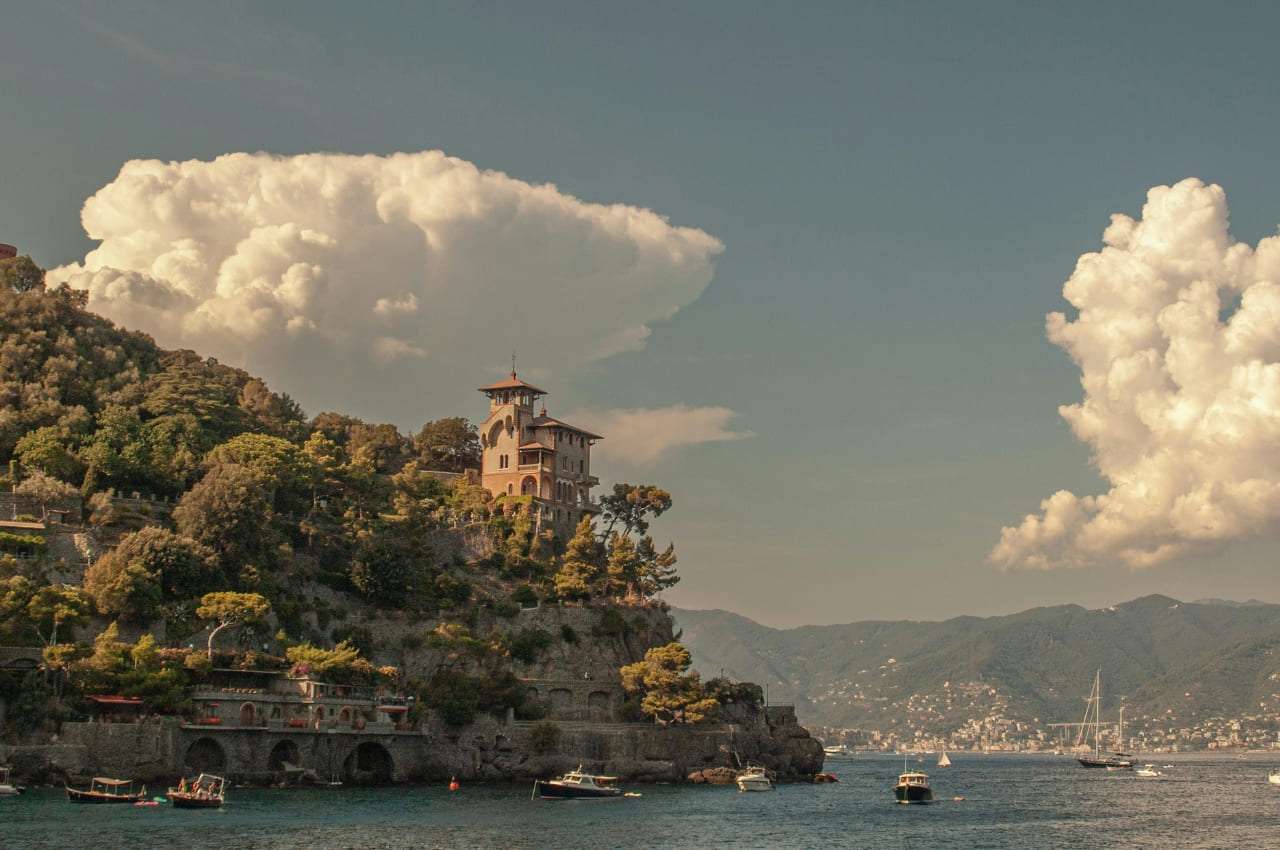
Many of the most exceptional Italian weddings take place not at hotels or established venues but at private villas rented specifically for the event — properties that are either family-owned estates opened for occasional celebrations, or high-end holiday villas managed through specialist rental agencies.
Private villa hire offers a specific kind of freedom that hotel venues cannot match. The entire property is yours: there are no other guests, no shared spaces, and no operational schedule that exists independently of your celebration. The villa becomes the wedding’s complete world for the days surrounding the event — arrival the day before, the celebration itself, a lazy morning after with the people closest to you. This structure, impossible at most commercial venues, is one of the primary reasons couples choose the private villa route.
The practical trade-off is in the planning complexity. A private villa is a residence, not a venue: it has no commercial kitchen brigade, no in-house events team, and no permanent setup for ceremonies. Everything — catering, staffing, furniture, power, sound, flowers, a tent if needed — arrives the day before and departs the day after. An experienced wedding planner who has worked in private villas is not optional for this format; it is the single most important factor in whether the event succeeds.
Where Private Villa Weddings Happen in Italy
Private villa weddings in Italy are concentrated in a handful of regions, each with its own character:
- Tuscany: The most established market. Converted farmhouses (case coloniche), mediaeval towers, and historic estates in the Chianti, Val d’Orcia, and Siena countryside. Strong infrastructure of specialist caterers, florists, and rental companies who know the format. Typical capacity: 50–200 guests. The landscape — rolling hills, cypress allées, olive groves — requires no dressing.
- Lake Como and Lake Maggiore: Villas with direct lake frontage, usually with terraced gardens descending to the water. The most photogenic ceremonies in Italy in terms of light and backdrop. Access is typically by boat, which shapes the logistics. Capacity tends to be smaller — 40–100 guests — due to the physical constraints of lakeside gardens.
- The Amalfi Coast and Campania: Cliff-top villas above Ravello, Praiano, and Positano, and estate properties in the Neapolitan hills above the bay. Dramatic settings, logistically demanding (narrow roads, vertical gradients, deliveries by boat or on foot). Well-suited to smaller groups of 20–60 who can adapt to the terrain.
- Sicily: Baroque estates and masserie (fortified farmhouses) in the southeast, citrus grove estates around Palermo, clifftop properties on the south coast. The most affordable private villa market in Italy relative to size and quality. Capacity ranges widely — some Sicilian properties can host 200+ guests on large terraces.
- Puglia: Masserie in the Itria Valley and Murge plateau — whitewashed stone farmhouses with trulli, olive groves, and outdoor ceremony spaces. A growing market over the past decade, now well-supplied with local caterers and vendors. Good value for large weddings (100–200 guests).
- The Ligurian Riviera: Cliff-side villas between Portofino, Santa Margherita, and the Cinque Terre. Limited supply, very high pricing, excellent views. Access often requires boat or restricted road access; logistically similar to the Amalfi coast but in a cooler, northern light.
- Rome and Lazio: Countryside villas in the Castelli Romani hills south of Rome, wine estates in the Frascati and Marino area, properties with views of the Roman campagna. Logistically easy — close to Rome’s airport and vendor network. Well-suited to guests combining the wedding with a Rome city break.
Finding the Right Villa
Private villa rental for weddings in Italy operates through several distinct channels:
- Specialist villa rental agencies: Companies that curate portfolios of verified, event-ready properties and handle the rental contract. They know which properties are genuinely set up for events and which have limitations that photographs don’t reveal — inadequate generator capacity, noise restrictions from neighbouring properties, weight-bearing limits on terraces.
- Direct owner relationships: Many of the most exclusive properties in Italy — family-owned estates that host two or three weddings per year — are accessible only through established local contacts. A planner with deep regional knowledge of a specific area is often the key to properties that never appear online.
- Destination wedding agencies: Full-service wedding companies who have a curated database of properties from their own event experience and can advise on the right match between the property and the wedding’s size, style, and budget.
When evaluating a private villa for a wedding, the questions that matter go beyond the photographs:
- Is there a professional kitchen, or only a domestic one? (This determines whether a caterer can work on-site or must bring a mobile kitchen setup.)
- What is the generator capacity? Lighting, sound, refrigeration, and catering equipment for a 100-person dinner may require 50–80kW of power — more than most private villas supply from the grid alone.
- What are the noise restrictions? Many Italian municipalities impose a curfew on amplified music — typically 11pm or midnight — and properties in residential areas may have neighbour agreements that are more restrictive still.
- How many guests can sleep on-site? On-site accommodation in the villa for the core wedding group — wedding couple, immediate family — changes the atmosphere of the event. A property that sleeps 20 and hosts 80 at dinner requires careful logistics for post-dinner transport.
- Is there a contingency space? Weather contingency at a private villa requires a tent or a covered area large enough for dinner and dancing. Not all villas have a suitable area; tent structures require level ground, anchoring points, and lead time.
Catering at a Private Villa
Catering is the most logistically significant element of a private villa wedding. Because the property has no in-house catering operation, everything must be brought in by a specialist caterer — and in some areas of Italy, the supply of caterers experienced in this format is limited.
An experienced Italian villa caterer will arrive the day before with a team, set up a mobile kitchen operation (sometimes supplementing the villa’s existing kitchen, sometimes installing a full mobile kitchen), and manage the service entirely independently. The quality range is wide: the best Italian private villa caterers produce food at the level of a fine restaurant for 100 people outdoors. The challenge is finding them and securing them — good caterers in Tuscany and Puglia book 18–24 months in advance for peak season Saturdays.
For properties with existing kitchens equipped to restaurant standard — more common in high-end Tuscan estates and Sicilian masserie — the caterer brings only staff and ingredients, which significantly reduces the logistical complexity and cost.
Civil Ceremonies at Private Villas
Legal civil ceremonies can take place at a private villa in Italy, but only under specific conditions. The ceremony must be officiated by the Mayor (or delegated civil registrar) of the municipality in which the villa is located. Some Italian municipalities actively support destination weddings at registered private properties; others are more restrictive. The process involves:
- Contacting the Comune (municipality) where the villa is located to confirm they offer the service and obtain the list of required documents.
- Providing documentation of legal capacity to marry (usually from the couple’s home country), translated and apostilled.
- Scheduling the ceremony date with the civil registrar’s availability.
- In some municipalities, paying a fee for the registrar to officiate outside the town hall (an autorizzazione per matrimonio in luogo diverso dal municipio).
Not every Italian comune will send a registrar to a private property; requirements and willingness vary significantly. For couples uncertain about the logistics, the alternative is to register legally at the local municipality and hold a symbolic ceremony at the villa — or to marry legally in their home country and hold the full celebration at the villa as a symbolic blessing.
Current municipal regulations and documentation requirements should be confirmed directly with the relevant Comune and with the wedding planner coordinating the event. Requirements change, and the information varies between municipalities.
Accommodation for Wedding Guests
Most private villas in Italy sleep between 10 and 30 guests on-site. For wedding parties of 50–150 guests, this means a mixed accommodation model: the immediate family and wedding couple in the villa, other guests in nearby hotels or agriturismo properties. The planner typically manages room block arrangements with nearby properties as part of the broader event coordination.
The advantage of a villa-centric model, even for guests not staying on-site, is the concentration: everyone gathers at the same property for the event itself, and the villa’s grounds become the shared world of the celebration rather than a lobby or a conference room.
Indicative Costs
Private villa wedding costs have two distinct components that are often conflated: the venue rental and the event production costs.
- Villa rental (Tuscany, indicative): A well-equipped estate sleeping 20–30 guests in a prime Chianti or Val d’Orcia location typically costs €8,000–€25,000 per week in high season (June–September), with most wedding rentals taking the property for 3–5 nights. Event-only fees (without full accommodation rental) are sometimes available for day use, typically starting at €3,000–€8,000 for the grounds and facilities.
- Villa rental (Sicily/Puglia, indicative): Comparable properties in Sicily and Puglia run approximately 30–50% below Tuscany at the same quality level — a reflection of the difference in international brand recognition between the regions, not in quality.
- Event production (catering + logistics): For a fully catered dinner with wine for 80 guests at a private villa in Italy, indicative 2026 market ranges run €250–€500 per person for premium service including food, wine, staffing, and mobile kitchen setup. Florals, lighting, music, and other production elements are additional.
These figures are market orientations only. Actual costs depend heavily on the specific property, location, guest count, menu, and service level. A detailed quotation is always required before any commitment.
What Private Villa Weddings Do Best
Private villa weddings are not suited to every couple or every wedding. They work best when:
- The guest list is 30–120 people — large enough to feel like a celebration, small enough that the property’s scale and intimacy remain intact.
- The couple wants multi-day immersion rather than a single event: two or three nights at the villa, unhurried mornings, impromptu afternoon swims, dinners that go on until the early hours.
- There is a planner with specific experience in the region and format — someone who knows which caterers can work in a mobile kitchen, which marquee company delivers on time, and what the noise curfew is in that comune.
- The couple is comfortable with a level of organisational complexity that does not exist when booking a hotel venue where the logistics are pre-packaged.
When these conditions are met, the private villa wedding format produces events that are genuinely unlike anything a commercial venue can replicate: the whole property as a stage set, with no one else there.
Frequently Asked Questions
Can we have a legal civil ceremony at a private villa in Italy?
Yes, in many cases — but it depends on the municipality where the villa is located. The ceremony must be officiated by the local Mayor or a delegated civil registrar, and the Comune must approve the villa as a ceremony location. Some municipalities actively facilitate this for destination couples; others do not. A wedding planner with local knowledge of the specific region can confirm whether the relevant Comune offers this service and manage the administrative process. Current requirements should always be confirmed directly with the Comune, as regulations vary and can change.
Which Italian region offers the best private villa weddings?
The right region depends on the wedding’s character. Tuscany offers the best-developed vendor ecosystem and the most recognisable landscapes (Chianti, Val d’Orcia). Sicily and Puglia offer better value per square metre and a warmer, more operatic atmosphere. Lake Como offers unmatched photographic settings but at very high cost and with logistical complexity. The Amalfi Coast and Liguria are for couples who want dramatic coastal settings and can manage the access constraints. Each region has its own season, vendor network, and administrative landscape — a planner with specific regional expertise matters more than the region itself.
How far in advance do we need to book a private villa for a wedding?
For peak season (May–September Saturdays) in Tuscany, Lake Como, and the Amalfi Coast, the most sought-after properties book 18–24 months in advance. Sicily and Puglia have more availability, but popular properties still fill up 12–18 months out. Off-season (October–April) availability is considerably better. The catering team and key vendors (photographer, florals, music) should ideally be confirmed at the same time as the venue — the best suppliers in any Italian region operate on the same booking timeline as the properties.
Is a wedding planner mandatory for a private villa wedding in Italy?
Not legally — but practically, yes. A private villa has no in-house events infrastructure: no kitchen brigade, no events manager, no permanent setup for ceremonies. The planner coordinates every supplier, manages the timeline across multiple days, handles the civil ceremony administration with the local Comune, arranges weather contingency, and resolves the dozens of logistical issues that arise in any complex event. Without a planner, the couple or their family absorbs all of that — which is incompatible with actually enjoying the wedding. An experienced planner who knows the region and has worked at private villas specifically (not just at hotels) is the single most important hire for this format.
What happens if it rains at a private villa wedding?
Every private villa wedding in Italy needs a weather contingency plan. This typically means a marquee or tent structure installed on the property’s grounds, capable of hosting the dinner and dancing indoors if needed. Good tent companies in Italy can install a beautiful, climate-controlled structure that is indistinguishable from the intended outdoor setup. The contingency structure requires level ground for installation, anchoring points, and usually a lead time of 1–2 days to install. Not all villas have a suitable area; this should be assessed as part of the venue selection process, not treated as an afterthought.
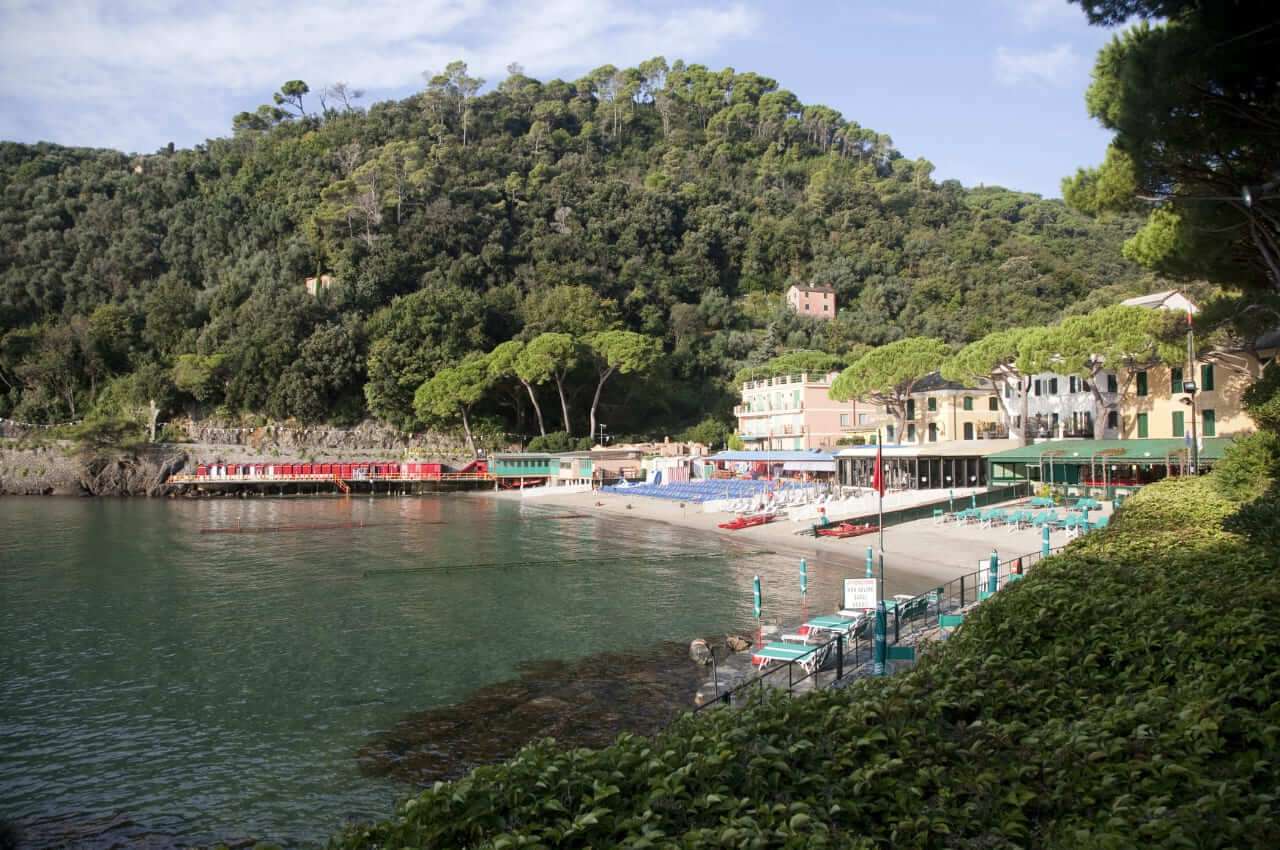
Paraggi is a small bay on the Riviera di Levante, situated between Santa Margherita Ligure and Portofino on the SP 227 di Portofino, within the municipality of Santa Margherita Ligure. It contains what is, by common agreement, the finest sandy beach in the Portofino area — significant because nearly every other shore on this stretch of the Ligurian coast is rocky. The bay faces south-southeast, receives direct sunlight through most of the day, and is enclosed by wooded headlands on both sides. Its water clarity is exceptional even by Ligurian standards, a consequence of the bay’s proximity to the Area Marina Protetta di Portofino and a local buoyed exclusion zone that prohibits motorised navigation within the bay itself.
As a wedding destination, Paraggi operates differently from a conventional venue. There is no single building that functions as a dedicated wedding hall. Instead, the bay offers a constellation of elements — the beach, the private beach club Bagni Fiore with its Langosteria restaurant, the boutique Eight Hotel Paraggi, and the backdrop of the Castello di Paraggi on the eastern headland — that a wedding planner assembles into a programme across the day. The setting is intimate by structural necessity: the beach is narrow, the access is controlled, and the atmosphere is naturally contained. Paraggi works for couples who want a wedding that is genuinely coastal — not a terrace with a sea view, but salt water, sand underfoot, and open sky.
The Bay: Geography and Marine Reserve
Paraggi Bay lies at coordinates 44°18′40″N 9°12′32″E, approximately 2.5 km northeast of Portofino and 3 km southwest of Santa Margherita Ligure by road. The SP 227 di Portofino — a 12.8 km coastal road running from Rapallo to Portofino — passes directly behind the bay, giving Paraggi its character as an accessible yet enclosed space: visible from the road and from passing boats, but sheltered within its own headlands.
The water quality at Paraggi is formally protected by the Area Marina Protetta di Portofino (AMP di Portofino), established by Ministerial Decree on 26 April 1999. The reserve covers approximately 346–376 hectares across the municipalities of Santa Margherita Ligure, Portofino, and Camogli, and is structured into three graduated zones. Zone A (integral reserve, strictest protection) includes areas such as Cala dell’Oro; Zone B (general reserve) covers sections off Punta Chiappa; Zone C (partial reserve, including areas adjacent to Paraggi) permits controlled recreational use — swimming, snorkelling, scuba diving, and sailing. The reserve protects red coral colonies, coralligenous seabeds, Posidonia meadows, and some of the highest marine biodiversity on the northern Mediterranean coast. In addition to the marine reserve, a local buoyed exclusion zone prevents motorised vessel entry into Paraggi Bay directly, which is why the bay’s water is free of the boat traffic that disturbs other Portofino-area beaches.
The beach itself is the only genuinely sandy beach near Portofino. It is narrow — approximately 300 metres long at its widest, with a limited depth between water and road — which is part of why events here remain intimate. Approximately 90% of the beach is administered by private beach clubs; a small public section (spiaggia libera) exists at one end. The four private beach clubs operating at Paraggi are Bagni Fiore, Le Carillon, Bosetti, and Eight (associated with Eight Hotel).
Castello di Paraggi
The most visually distinctive element of Paraggi Bay is the Castello di Paraggi, which sits on the eastern headland closing the bay. It is strictly private and cannot be visited internally, but its presence defines the visual character of the setting — any ceremony photograph taken from the beach includes it.
The castle was constructed from 1626 by the Republic of Genoa as a coastal defence installation, built to resist piracy and prevent plague-carrying ships from landing on the Tigullio coast. Its architecture reflects this defensive origin: a massive stone structure with a square floor plan, four bracketed corner turrets, and Guelphic crenellation (rectangular merlons) along the parapet. A large loggia opens on the south-eastern facade. French imperial forces occupied it between 1812 and 1814 during the Napoleonic period.
In approximately 1882, British expatriate Frederick Brown acquired the then-disused castle and began a transformation into a private residence. A restoration dated to 1890 saw the original defensive moat along the cliff edge filled in and the loggia added. In the 1970s–80s, the property passed to Carlo Bonomi; current ownership is held by Anna Bonomi Campanini of Milan. In the 1990s, the Bonomi family rented the castle to Silvio Berlusconi’s family, making it one of the more photographed private residences on the Italian Riviera during that period. The castle remains entirely private.
Bagni Fiore: The Beach Club
Bagni Fiore (Via Paraggi a Mare, Santa Margherita Ligure) is the principal wedding and event venue at Paraggi beach. It was founded in 1927, making it one of the oldest operating beach clubs on the Ligurian Riviera. Its guest list over the decades has included Brigitte Bardot, Maria Callas, and Elizabeth Taylor.
In 2017, the Gruppo Langosteria — the Milan-based luxury seafood restaurant group — took over operations and installed Langosteria Paraggi as the in-house restaurant. Langosteria’s first restaurant on Via Savona in Milan had by then become one of the most-visited seafood tables in Italy; the Paraggi outpost operates as a pieds-dans-l’eau dining experience directly facing the bay. The menu focuses on raw seafood, crudo preparations, and Ligurian fish dishes.
In June 2022, Dior used Bagni Fiore as the setting for its Dioriviera summer activation, covering bar, lounge, beach cabins, sunbeds, cushions, and parasols in a leaf-green toile de Jouy pattern and operating a temporary Dior spa at the water’s edge. The partnership illustrated the kind of brand that now associates itself with Paraggi as a setting.
Bagni Fiore explicitly accommodates weddings, birthdays, press events, and bespoke functions. The venue provides a dedicated team including chef and in-house service staff. The combination of the Langosteria kitchen, the beachfront terrace, and the bar (Bar Fiore) gives a wedding at Bagni Fiore access to a quality of catering that goes well beyond what most beach venues can offer.
Eight Hotel Paraggi
Eight Hotel Paraggi is a 19th-century restored villa positioned directly on the bay, with 12 rooms and suites and its own beach concession. It is the only hotel situated on Paraggi beach itself. The scale — 12 rooms, boutique positioning — means that a wedding group booking most or all rooms creates an effectively private environment for the event. Eight Hotel handles weddings and events on-site, with the option of using their beach section for the ceremony and their indoor and terrace spaces for&�he reception.
Wedding Event Structure at Paraggi
A typical full-day wedding using Paraggi as its centrepiece follows a programme that spans the beach, the beach club, and a nearby civil ceremony venue. A common structure:
- Civil ceremony: At Villa Durazzo in Santa Margherita Ligure (see below) or at Portofino Town Hall, conducted by a civil registrar from the Comune.
- Beach ceremony or blessing: A symbolic ceremony at Bagni Fiore beach or Eight Hotel beach — guests seated on the sand or on the terrace — immediately following or in lieu of the civil ceremony.
- Aperitivo and cocktail reception: On the Bagni Fiore terrace or Eight Hotel outdoor spaces, with Langosteria catering service and Bar Fiore cocktails.
- Dinner reception: At Langosteria Paraggi (Bagni Fiore), or at a restaurant in the Portofino or Santa Margherita area for larger groups — accessible by water taxi or shuttle.
The physical constraint of the beach — narrow, with access via a single road or by boat — naturally shapes the event. Groups arrive and depart in waves rather than all simultaneously. For a wedding group travelling from Portofino harbour by private water taxi, the arrival at the beach has a cinematic quality that organised overland transport cannot replicate.
Civil Ceremonies and Legal Framework
Legal civil ceremonies cannot be conducted on the beach itself under Italian law. A legally binding ceremony must be performed by a public official (the Mayor or delegated registrar) at a designated civil registry venue. For couples marrying in this area, the two principal options are:
- Villa Durazzo, Santa Margherita Ligure: A 17th-century villa with frescoed reception halls, formal gardens, and views over the Gulf of Tigullio. The Comune di Santa Margherita Ligure operates Villa Durazzo as the official civil ceremony venue for the municipality. Capacity up to approximately 100 guests. Paraggi is administered by the Comune di Santa Margherita Ligure, so Villa Durazzo is the most natural pairing with a Paraggi reception.
- Portofino Town Hall: For smaller ceremonies; Portofino is a separate, small comune. More intimate but with strictly limited capacity.
Many destination couples who are already legally married in their home country choose a symbolic ceremony on the beach with no civil registration requirement in Italy. This removes the documentation complexity and allows the full ceremony to take place at Bagni Fiore or Eight Hotel. Current arrangements and documentation requirements should be confirmed directly with the Comune di Santa Margherita Ligure and with the wedding planner coordinating the event.
Capacity and Configuration
No official seated capacity figure is published for beach ceremonies at Paraggi. Based on the physical dimensions of the beach club terrace and beach sections, and comparable Italian beach ceremony configurations:
- Seated beach ceremony: Approximately 50–80 guests is the comfortable working range for a well-organised ceremony on the sand. The narrow beach depth limits the number of ceremony rows.
- Terrace cocktail reception: Bagni Fiore’s terrace can accommodate larger standing receptions; estimates from event photography suggest 80–120 guests in a cocktail format.
- Langosteria Paraggi dinner: The restaurant operates at normal service capacity; for a private event buyout, capacity should be confirmed directly with Bagni Fiore’s events team.
- Eight Hotel private buyout: With 12 rooms and the beach concession, Eight Hotel accommodates the most intimate configurations — typically 20–40 guests for a fully private buyout experience.
These figures are operational estimates; actual licensed capacity for each configuration should be confirmed directly with Bagni Fiore (info@bagnifiore.com) or Eight Hotel Paraggi before planning.
Indicative Costs
Paraggi operates at the premium end of the Italian Riviera market. Individual beach lounger pricing at Bagni Fiore runs approximately €170–240 per day in high season; a buyout for an event reflects this premium positioning. Indicative 2026 market ranges for a full wedding event at Bagni Fiore (ceremony + aperitivo + dinner for 30–80 guests) typically fall in the range of €15,000–€50,000+ for the venue and catering element, depending on guest count, menu selection, and whether a full Langosteria dinner service is included. Accommodation at Eight Hotel and nearby Belmond properties adds to the overall budget. These figures are market orientations only; actual pricing is provided by the venues based on the specific programme.
Seasons and Timing
Bagni Fiore and the Paraggi beach clubs operate seasonally, typically from late April or early May through September or October. The rooftop terrace at Eight Hotel and outdoor event spaces at both venues follow the same seasonal availability.
- May–June: The most sought-after period. Temperatures are comfortable for formal dress, the beach is not yet at peak summer density, and the Ligurian light in the late afternoon is at its finest. Saturday dates book 12–18 months in advance.
- July–August: Peak season. The SP 227 road to Paraggi becomes one of the most congested routes on the Italian Riviera; logistical planning (pre-arranged shuttles, water taxis from Portofino) is essential for wedding groups. Temperatures require scheduling the ceremony in the morning or evening hours. The beach at sunset is exceptional.
- September: Lower tourist density than July–August, cooler temperatures, the characteristic amber Ligurian autumn light. Often the preferred month for couples who want the setting without the high-season logistics.
- October: The beach clubs begin to wind down; early October can still be viable for smaller, private events. Confirm availability with venues.
Getting to Paraggi
Paraggi’s accessibility is one of its defining logistical characteristics — the beach is reachable by road, on foot, and by water, but each option has constraints that shape how a wedding group should plan arrivals.
- By private water taxi: The most visually spectacular arrival for a wedding party. Private water taxis operate from Portofino harbour (1.6 km, approximately 10 minutes) and from Santa Margherita Ligure marina (approximately 20 minutes). This is the standard recommendation for the wedding couple’s arrival and for small groups.
- By bus: Bus line 82/782 runs from Santa Margherita Ligure train station through Paraggi to Portofino. Journey time approximately 15 minutes from Santa Margherita. The stop is directly at the beach — a practical option for guests travelling without a car.
- By car: Via the SP 227 di Portofino. A small private car park at Paraggi charges approximately €40 for 5 hours. During July–August, parking is essentially unavailable without advance reservation. For wedding groups, pre-arranged shuttle services from Santa Margherita Ligure or Rapallo are strongly recommended.
- On foot from Portofino: The Passeggiata dei Baci (Walk of Kisses) is a coastal path connecting Portofino to Paraggi, approximately 19–25 minutes. Scenic but not suitable for formal wedding attire.
- By transfer: Approximately €25–31 by taxi from Portofino. For wedding groups, pre-booked minibus transfers from Santa Margherita Ligure or Rapallo are the standard logistics solution.
The nearest train station is Santa Margherita Ligure-Portofino, on the Genoa–La Spezia line. International guests typically arrive via Genoa Cristoforo Colombo Airport (GOA), approximately 40–45 minutes by road, or via Milan (Malpensa or Linate), approximately 2 hours.
Nearby Accommodation
For a wedding party distributed across nearby properties, the options by proximity:
- Eight Hotel Paraggi (on the bay): 12 rooms and suites, the only hotel directly on Paraggi beach. Full buyout creates a private environment for the wedding group.
- Belmond Hotel Splendido, Portofino (2 km): A former 16th-century Benedictine monastery set on the hillside above Portofino harbour, 70 rooms and suites across 4 acres of terraced gardens. Pool, spa, fine dining. Italy’s most historically significant luxury hotel in this coastal area; the reference property for the Portofino Riviera.
- Belmond Splendido Mare, Portofino (2 km): Belmond’s second Portofino property, in the Piazzetta di Portofino harbour itself. 16 rooms and suites. Guests of both Belmond properties share facilities including the hillside pool.
- Grand Hotel Miramare, Santa Margherita Ligure (3 km): 120 years in operation, owned by the Fustinoni family since 1945. Member of The Leading Hotels of the World. 72 rooms, spa, sea-view terrace, beachfront position.
- Imperiale Palace Hotel, Santa Margherita Ligure (3 km): 19th-century villa with private beach, lush gardens, and views over the Gulf of Tigullio.
Frequently Asked Questions
Can we have a legal civil ceremony on the beach at Paraggi?
No — legal civil ceremonies must be conducted by a public official at a designated civil registry venue under Italian law. For couples marrying at Paraggi, the primary option for the civil ceremony is Villa Durazzo in Santa Margherita Ligure (the Comune that administers Paraggi), a 17th-century villa operating as the official ceremony venue with capacity up to approximately 100 guests. Many destination couples choose a symbolic ceremony on the beach instead, particularly if they are already legally married at home. Current civil ceremony arrangements should be confirmed directly with the Comune di Santa Margherita Ligure.
What is Bagni Fiore and what does it offer for weddings?
Bagni Fiore is the principal private beach club at Paraggi, founded in 1927. Since 2017 it has been operated by Gruppo Langosteria, with Langosteria Paraggi as the in-house restaurant — a pieds-dans-l’eau seafood dining experience directly facing the bay. The venue accommodates weddings, private functions, and bespoke events with a dedicated team including chef and service staff. Contact: info@bagnifiore.com / +39 0185 284831.
Is Paraggi beach fully private?
Approximately 90% of Paraggi beach is administered by four private beach clubs (Bagni Fiore, Le Carillon, Bosetti, and Eight). A small spiaggia libera (public beach) section exists at one end of the bay. For a wedding event using the Bagni Fiore or Eight Hotel beach concession, the relevant section of beach is private to those clubs’ guests during operating hours.
What is the castle visible on the eastern headland?
The Castello di Paraggi, built from 1626 by the Republic of Genoa as a coastal defence installation. It has a square floor plan with four bracketed corner turrets and Guelphic crenellation. Acquired circa 1882 by British expatriate Frederick Brown and restored as a private residence by 1890; it passed to the Bonomi family (Carlo Bonomi) in the 1970s–80s and is currently owned by Anna Bonomi Campanini. The Berlusconi family rented it in the 1990s. The castle is strictly private and not open to visitors, but is visible from the beach and from the water.
How do guests get to Paraggi without a car?
By private water taxi from Portofino harbour (1.6 km, ~10 minutes) or Santa Margherita Ligure marina (~20 minutes) — the recommended arrival method for the wedding party itself. By bus line 82/782 from Santa Margherita Ligure train station (~15 minutes), with a stop directly at the beach. On foot from Portofino via the Passeggiata dei Baci (~20–25 minutes). For groups, pre-arranged shuttle services from Santa Margherita Ligure are the standard logistics solution, as parking at Paraggi is severely limited in high season.
What makes the water at Paraggi so clear?
Two reinforcing factors: proximity to the Area Marina Protetta di Portofino (established 1999, covering ~346 hectares with Zone C protections including the Paraggi area), and a local buoyed exclusion zone that prohibits motorised navigation within the bay itself. Both prevent the boat traffic and seabed disturbance that cloud the water at less protected beaches.
Luxury Portofino Wedding Planning Services
With over 20 years of experience in luxury events, Giorgia Fantin Borghi and her team craft weddings that blend elegance, precision, and creativity, ensuring your special occasion is flawless from start to finish.
Exclusive Venue Selection & Private Viewings
Gain access to Portofino’s most sought-after locations, like historic abbeys, luxury hotels, or private beachfront estates. We arrange discreet VIP viewings to help you find the perfect backdrop for your celebration.
Seamless Legal & Paperwork Assistance for UK Couples
Navigating Italian wedding laws can be complex, but our team ensures everything is handled smoothly. From securing the necessary documents to liaising with local authorities, we take care of the legalities so you don’t have to.
The Finest Vendors, Hand-Selected for You
We collaborate with Portofino’s top-tier florists, chefs, photographers, and designers, ensuring every detail reflects your style. From world-class floral installations to Michelin-starred catering, only the best will be part of your wedding.
Tailored Styling & Luxury Décor
With a deep understanding of etiquette, artistry, and refined aesthetics, Giorgia Fantin Borghi transforms your vision into reality. Every element—from tablescapes to lighting—exudes elegance, creating an atmosphere that is uniquely yours.
Let’s Make Your Wedding Day Unforgettable
Your dream wedding deserves nothing less than perfection.
With our expertise, exclusive venues, and impeccable attention to detail, we bring your vision to life—seamlessly, elegantly, and stress-free.
Book a Consultation Today!
All information requested is mandatory.
Thank you!
We only accept requests with a minimum wedding spending of € 150.000
This site is protected by Google reCAPTCHA v3,
Google’s Privacy Policy and Terms of Service.
Weddings in Sicily FAQs
How much does a wedding in Portofino cost?
Can you help with legal paperwork for UK couples?
How can you help UK couples plan a wedding in Portofino?
Still have questions?